Evidence check
Does Zeaxan Really Work? What Results and Before-and-After Claims Can Show
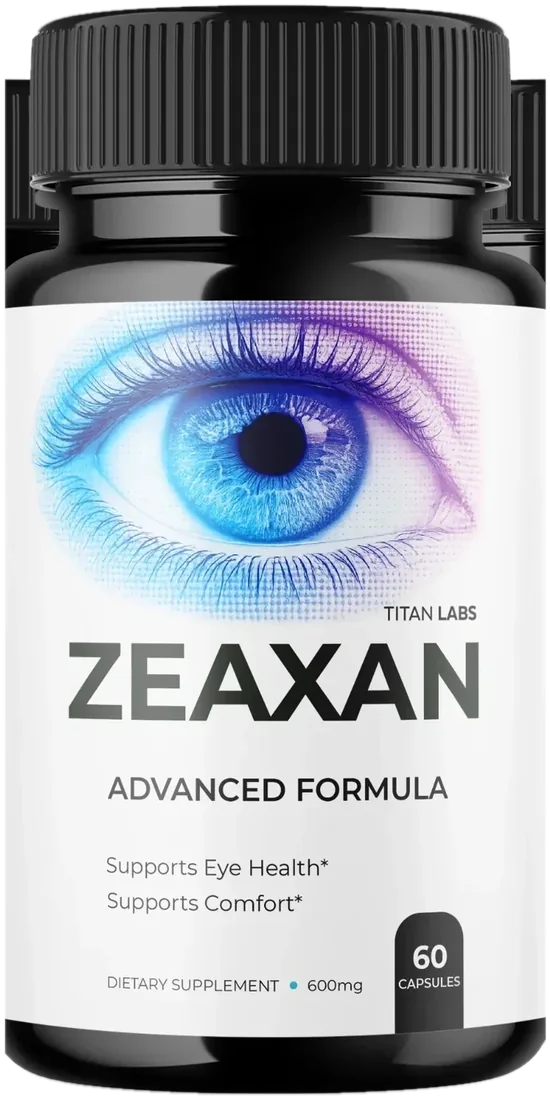
Nobody can say yet. No study of the finished Zeaxan capsule has been published, and the label only says it supports eye health and comfort. Research on lutein and zeaxanthin exists, but in other formulas and in people with a specific eye condition. Buyer reports are mixed and not verified.
Does Zeaxan really work?
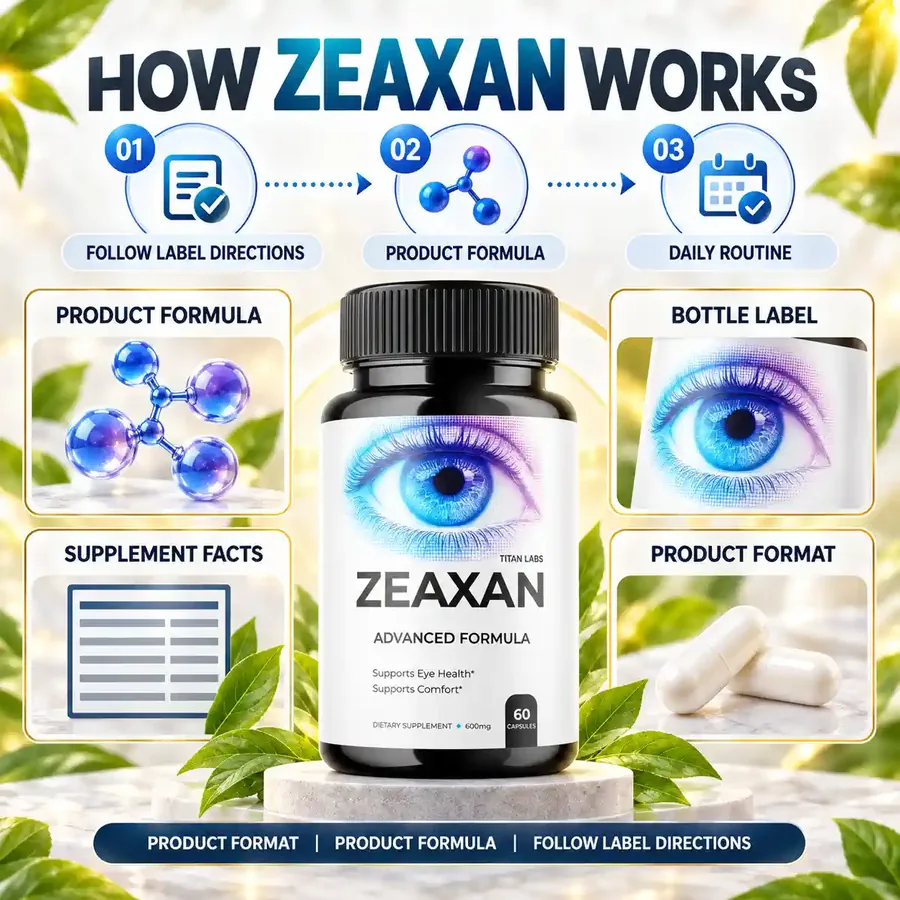
The honest answer is that this has not been shown. The label makes a support claim, not a result claim. "Supports Eye Health" and "Supports Comfort" tell you what the brand intends. They do not say what happened when people took the capsules.
Two kinds of evidence could answer the question. One is a study of the finished product. The other is a large body of research on its parts. The first does not exist in public. The second exists, but it points mostly at other formulas and other people.
So the fair summary is this. Some ingredients have been studied for something. Whether this mix, at amounts the label does not print, does anything for your eyes is unknown. We would rather say that than guess.
Key facts
- No study of the Zeaxan formula is published that we can find.
- AREDS2 gave 10 mg of lutein and 2 mg of zeaxanthin daily to people with intermediate AMD (NEI).
- The NEI reports no benefit from the earlier AREDS formula in people with no AMD or only early AMD.
- Zeaxan prints no amounts, and it is not an AREDS2 formula.
- Reviewers mostly held off 4 to 8 weeks before forming a view, and a slow start topped the complaints.
- No before-and-after photo or eye test for Zeaxan is published here.
What does the research on lutein and zeaxanthin show?
The best-known work is AREDS2, run by the National Eye Institute. The formula it tested held 10 mg of lutein and 2 mg of zeaxanthin per day, alongside vitamins C and E, zinc and copper. Everyone in it already had intermediate age-related macular degeneration (NEI).
That setting matters. For people with no AMD, or AMD at an early stage, the NEI found the earlier AREDS formula gave no benefit. So the study is not proof that lutein and zeaxanthin sharpen healthy eyes. It is not proof that a capsule protects anyone from disease either.
| Point | AREDS2 (NEI) | Zeaxan label |
|---|---|---|
| Lutein per day | 10 mg | Not published (ceiling: 120 mg of material) |
| Zeaxanthin per day | 2 mg | Not published (ceiling: 60 mg of material) |
| Other nutrients | Vitamins C and E, zinc, copper | Salt, cinnamon, choline, bacopa, bilberry leaf, two B vitamins, ginkgo, green tea extract |
| Who was studied | People with intermediate AMD | No study of this product published |
What does the research say about the other ingredients?
Most of the other nine ingredients have no strong link to the eye in the sources we use. Bacopa has been looked at for thinking speed. Nine trials, pooled in one review, found small gains in processing speed when a standardized extract was taken for 12 weeks or longer (Kongkeaw et al., 2014). That is not eye research.
For bilberry, NCCIH says rigorous studies have not found that it improves night vision, and Zeaxan uses the leaf rather than the fruit (NCCIH, 2024). For ginkgo, NCCIH says there is no conclusive evidence that it helps any condition (NCCIH, 2025). For cinnamon, it says research does not clearly support its use for any condition (NCCIH, 2024).
None of that proves the blend does nothing. It means the public research does not show that it does something for the eyes.
What do buyers say about results?
The order desk reports 4.4 out of 5 from 848 written reviews across 8,570 orders, with 91% saying they would recommend it. These numbers are not independently verified. The desk says most reviewers waited 4 to 8 weeks before judging, and the top complaint was a slow start.
Read that carefully. A review says how a routine felt to someone. It is not an eye test. None of the cards we can see describes a measured change in sight. The ones that sound happiest mention a daily habit that stuck and a reorder. That is about the routine, not about eyes.
The review post reads the eight sample cards line by line.
Can before-and-after claims be trusted?
A before-and-after claim compares two moments and credits the product for the gap. Many things change between two moments: lighting, tiredness, screen time, season, a new pair of glasses. Without a control group and a measured test, the claim cannot say what caused the change.
This site publishes no before-and-after photo or eye chart result for Zeaxan, because none has been provided. We also do not repeat anyone else's. If a page shows one, ask who measured it, how, and whether the product was the only thing that changed.
What would count as solid evidence
- A published study of the finished capsule.
- Printed amounts you can compare with study doses.
- An eye exam before and after, done by a professional.
What does not count
- A bare star rating.
- A photo with no source.
- A claim that sight is restored or a disease reversed.
How can you test Zeaxan fairly for yourself?
If you decide to try it, set the test up so that it tells you something. A fair test uses the label dose, a fixed time of day and a fixed end date.
Take the label dose
2 capsules a day between meals. More does not make a better test, and the label says not to exceed the dose.
Pick a review date
Choose a day in the 4 to 8 week range that reviewers mention. One bottle runs 30 days, so plan for more than one.
Keep an eye exam on the calendar
Only an eye doctor can measure a change. Ask what schedule fits you.
Note anything unwanted
Stomach upset, a rash or bleeding means you stop and call a doctor.
The timeline post turns this into a week-by-week plan.
What should you do if your eyes bother you?
Do not let a supplement answer that for you. If sight changes suddenly, or you get eye pain, flashes of light or new floaters, book an eye exam promptly. A capsule can delay that visit, and delay can matter.
Eye problems are found through regular dilated exams. Those exams also give you a real before-and-after, measured by someone trained to read it.
Why do eye supplements use the word support?
Under U.S. rules, a supplement may describe an ingredient's link to normal body structure or function without FDA review. It may not claim to treat, cure or prevent a disease. So the bottle says Supports Eye Health and names no condition.
The rules shape the wording, not any test. A good habit is to read any support line as a statement of purpose, then look for amounts and studies. In Zeaxan's case no amounts are printed and no study of the formula is published, so the claims describe a hope.
What should you ask your eye doctor?
- Do my eyes call for any supplement at all?
- Is an AREDS-style formula something I should consider, given my exam?
- How often should I come in for a dilated exam?
- Does anything on the Zeaxan label clash with my medicines?
Take the bottle, or a picture of the back panel, along. A doctor can use the ingredient list. A star rating gives them nothing to work with.
What are the evidence and guarantee facts?
The table lists what is published and what is not, so you can see how much weight a result claim can carry.
| Question | Answer from the sources | Status |
|---|---|---|
| Study of the finished capsule | None published that we can find | Not published |
| Label claim | Supports Eye Health*; Supports Comfort* | Brand wording |
| Reviews | 4.4 out of 5; 848 written; 8,570 orders; 91% recommend | Order-desk data, not verified |
| Wait before judging | Most said 4 to 8 weeks | Reported, not promised |
| Guarantee | 60 days; terms at checkout | Written terms at checkout |
| Price | Shown at checkout | Not published here |
Frequently asked questions
Does Zeaxan work for eyesight?
No evidence shows that it does. No study of the formula is published, and the label claims only support. This site makes no vision claim.
Is there a Zeaxan before and after?
None is published here. Before-and-after claims cannot show cause, and only a measured eye exam can show a change.
Do lutein and zeaxanthin work for eyes?
In AREDS2, people with intermediate AMD took 10 mg of lutein and 2 mg of zeaxanthin a day. Without AMD, or with early AMD, the earlier AREDS formula showed no benefit, per the NEI.
Why do some buyers say it did nothing?
The top complaint in the order-desk data is a slow start. Some buyers wanted more in the first week. Results vary and no timeline is promised.
Can Zeaxan prevent macular degeneration?
No. Supplements cannot claim to prevent disease, and Zeaxan is not an AREDS2 formula.
What if it does not work for me?
A 60-day money-back window is on the listing. Read the written terms on the order page, then call the order desk with your order ID.
Sources for this page
- National Eye Institute. About AREDS and AREDS2. Source
- Kongkeaw C, Dilokthornsakul P, Thanarangsarit P, Limpeanchob N, Scholfield CN. Meta-analysis of randomized controlled trials on cognitive effects of Bacopa monnieri extract. J Ethnopharmacol, 2014. Source
- National Center for Complementary and Integrative Health. Bilberry: Usefulness and Safety. Updated November 2024. Source
- National Center for Complementary and Integrative Health. Ginkgo: Usefulness and Safety. Updated February 2025. Source
- National Center for Complementary and Integrative Health. Cinnamon: Usefulness and Safety. Updated November 2024. Source
- U.S. Food and Drug Administration. Dietary Supplements. Source
Keep reading
Our view
We cannot tell you that Zeaxan works, and we will not pretend to. The evidence for the finished capsule is missing, and the evidence for its parts mostly belongs to other formulas.
What we can say is that the label is honest about the dose and quiet about the amounts, that buyers are split between a settled routine and a slow start, and that a 60-day window exists for people who want to test it. If your eyes are a worry, see an eye doctor first and ask whether any supplement makes sense for you.
Last updated
Ready when you are
Try it with a clear end date
If you decide to test Zeaxan, the order page shows the full price and the written guarantee terms before you pay.
We earn money when you buy through our order links. The price you pay is the same.