Guide for adults
Everyday Eye Health: Habits That Come Before Zeaxan
Everyday eye health rests on a few plain habits: regular dilated eye exams, sunglasses that block UV, screen breaks, not smoking, leafy greens and colorful vegetables, and keeping blood sugar and blood pressure in check with a doctor. A 2-capsule supplement such as Zeaxan can sit on top of these habits. It cannot replace any of them.
What keeps adult eyes comfortable and healthy?
For most adults, a handful of plain habits do the most: regular eye exams, sun protection, screen breaks, not smoking, and a plate with plenty of vegetables. Good care of your general health, such as blood sugar and blood pressure, matters for your eyes too.
This guide walks through each habit in plain terms. It lists the warning signs that need care the same day. Then it looks at where a supplement such as Zeaxan can fit, and where it cannot.
Regular eye exams
A dilated exam lets an eye doctor see the back of the eye. Many eye problems give no early signs you can feel.
Sun and UV
Sunglasses that block UV rays and a hat with a brim cut the sunlight that reaches your eyes.
Screen habits
Short breaks, a comfortable screen distance and remembering to blink help long days at a desk feel easier.
Food on the plate
Leafy greens, colorful vegetables and eggs bring lutein and zeaxanthin, along with many other nutrients.
Why do regular eye exams come first?
Eye exams come first because many eye problems cause no pain and no early change you would notice. A dilated exam lets an eye doctor look at the retina and the optic nerve at the back of the eye.
How often you need an exam depends on your age, your health and your family history. Ask your eye doctor what schedule fits you. People with diabetes, or with a parent or sibling who has an eye disease, often need closer follow-up.
Which daily habits matter most for your eyes?
The daily habits that matter most are sun protection, screen breaks, not smoking and careful contact lens use. Each is small on its own. Together they shape how your eyes feel today and over the years.
| Habit | Small, steady step | What to watch for |
|---|---|---|
| Eye exams | Book a dilated exam and ask your eye doctor how often you need one | Putting it off because your eyes feel fine |
| Sunglasses | Pick a pair labeled as blocking UVA and UVB rays | Dark lenses with no UV label, which can let more light in |
| Screens | Look away from the screen at something far off every so often | Dry, tired or burning eyes by the end of the day |
| Smoking | Quit, and ask your doctor about support that helps | Assuming it only affects the lungs |
| Food | Add a leafy green or a colorful vegetable to one more meal a day | Relying on a capsule in place of vegetables |
| Blood sugar and blood pressure | Keep up with checkups and follow your doctor's plan | Skipping medicine or tests when you feel well |
| Contact lenses | Follow the cleaning and replacement schedule your eye doctor gave you | Sleeping or swimming in lenses not meant for it |
Sunglasses and UV light
Sunlight carries UV rays, and years of exposure add up. Look for sunglasses labeled as blocking UVA and UVB rays. Darker lenses are not always better. A wide-brimmed hat adds more shade. Wear both on bright days, near water and on snow, where light bounces back up at you.
Screens and close work
Long hours at a screen can leave eyes dry, tired or sore. People tend to blink less when they stare at a screen. Short, regular breaks help. Look away at something across the room or out a window, and blink a few times. Keep the screen at arm's length and a little below eye level. Cut glare from windows and overhead lights.
Screen breaks help comfort. They do not change the eye itself. If your eyes stay sore or blurry after a rest, that is a reason for an exam.
Smoking
Smoking is linked to a higher risk of several age-related eye diseases, as well as heart and lung disease. Quitting at any age helps your health. Your doctor can point you to support that makes quitting more likely to stick.
Which foods carry lutein and zeaxanthin?
Dark leafy greens such as kale and spinach are some of the richest food sources of lutein and zeaxanthin. Other green vegetables, corn, orange peppers and egg yolks also carry them.
| Food group | Examples | What it brings |
|---|---|---|
| Dark leafy greens | Kale, spinach, collard greens, turnip greens | Some of the richest food sources of lutein and zeaxanthin |
| Other green vegetables | Broccoli, peas, romaine lettuce, Brussels sprouts | Lutein plus fiber and other vitamins |
| Yellow and orange foods | Corn, orange peppers, squash | Zeaxanthin and other colorful plant pigments |
| Eggs | Whole eggs, with the yolk | Lutein and zeaxanthin in the yolk, eaten with some fat |
Both are carotenoids, the natural pigments that give many plants their yellow, orange and green shades. They dissolve in fat. A little oil in a salad dressing, or cooking greens with some olive oil, helps the body take them up.
Food brings much more than these two pigments. Vegetables also carry fiber, vitamins and minerals that no single capsule copies. Health agencies advise people to get most of their nutrients from food (NIH ODS). A capsule can add to a diet. It cannot rebuild one.
The lutein and zeaxanthin guide goes deeper on where these two pigments sit in the eye and what research has used.
Why do blood sugar and blood pressure matter for your eyes?
Blood sugar and blood pressure matter because the eye has many tiny blood vessels. Over time, high blood sugar or high blood pressure can damage them, often with no early symptoms.
That is why people with diabetes are usually told to have a dilated eye exam on a regular schedule. Keep up with the checkups your doctor sets. Take medicines as prescribed, even on days you feel well. Tell your eye doctor about any health condition and every medicine you take.
Which eye symptoms need urgent care?
Sudden changes in vision, new flashes or floaters, eye pain and eye injuries need urgent care from an eye doctor or an emergency room. Do not wait to see if they pass, and do not reach for a supplement.
- Sudden loss of vision, or a dark curtain or shadow across part of what you see.
- Sudden flashes of light, or a shower of new floaters.
- Eye pain, especially with redness, headache or nausea.
- Sudden double vision, or blurry vision that comes on quickly.
- Any injury to the eye, or a chemical splash. Rinse with clean water and get help right away.
Where can a supplement like Zeaxan fit?
A supplement like Zeaxan can only fit on top of the habits above, never in place of them. It is a dietary supplement, and US law does not require supplements to show they work before they are sold (FDA).
What it can and cannot do
- Add a simple daily habit: 2 capsules a day, 30 days per bottle.
- Supply some lutein and zeaxanthin, in amounts the label does not publish.
- Come with a 60-day money-back window, so a trial has a clear end date.
- Replace an eye exam, glasses, or care your eye doctor prescribes.
- Stand in for sunglasses, screen breaks, not smoking or leafy greens.
- Explain or fix blurry vision, eye pain, flashes or floaters.
- Match the AREDS2 formula. It is a different product with printed amounts.
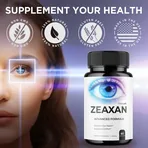
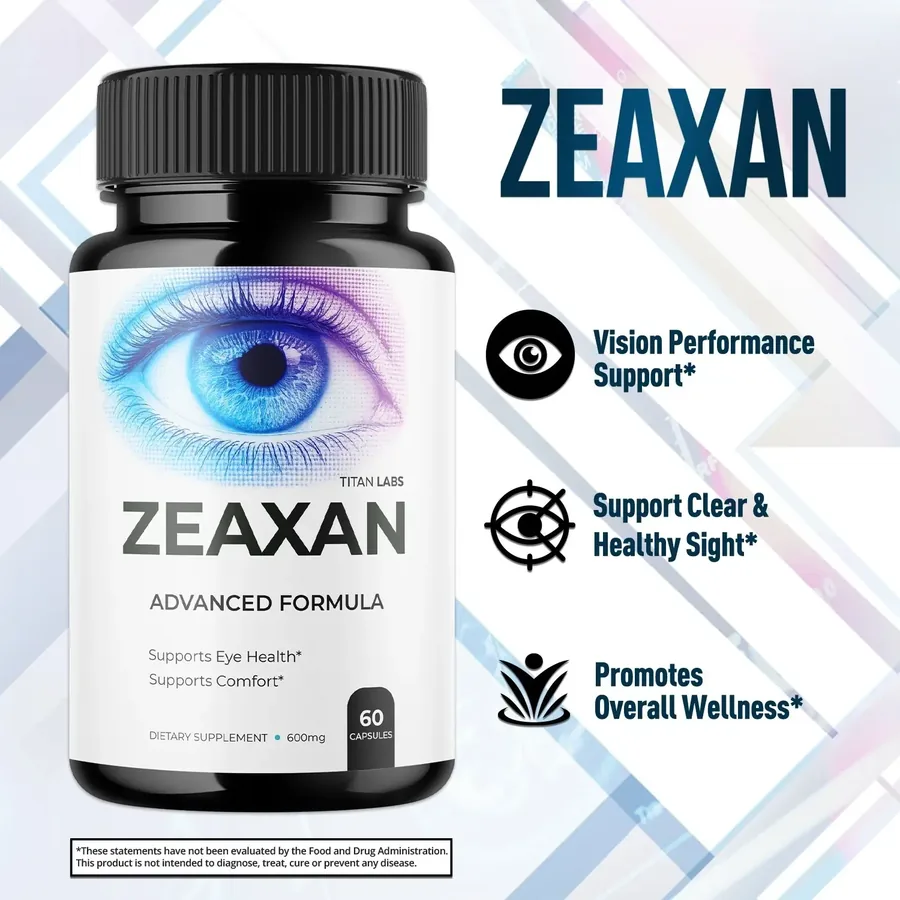
The front label says "Supports Eye Health" and "Supports Comfort". Those are the maker's words. This site does not claim the capsules improve sight or protect against any eye disease.
Each 2-capsule serving holds a 600 mg blend of 11 ingredients. The largest single ingredient by weight is Himalayan pink salt, not an eye nutrient. Lutein is fifth and zeaxanthin is tenth. The label prints no amount for either. The Supplement Facts page covers every line.
How AREDS2 sets expectations
The most cited eye supplement research is the NEI's AREDS2 study. Its formula used 10 mg of lutein and 2 mg of zeaxanthin a day, with other nutrients, in people who already had intermediate age-related macular degeneration (NEI). NEI notes that the original AREDS formula showed no benefit for people without the disease or with its early stage.
So even the studied formula was aimed at a specific group, under an eye doctor's care. Zeaxan is a different product with a different recipe. It should not be read as a copy of AREDS2.
The label also asks pregnant or nursing mothers, anyone under 18 and anyone with a known medical condition to consult a physician first. The side effects page covers each ingredient.
Everyday eye health: common questions
How often should I get an eye exam?
It depends on your age, health and family history. Ask your eye doctor what schedule fits you. People with diabetes often need regular dilated exams.
Which foods have lutein and zeaxanthin?
Dark leafy greens such as kale and spinach, other green vegetables, corn, orange peppers and egg yolks.
Can Zeaxan replace my eye exam?
No. A supplement cannot find or explain an eye problem. Keep your exams and follow your eye doctor's advice.
Is Zeaxan the same as the AREDS2 formula?
No. AREDS2 used 10 mg lutein and 2 mg zeaxanthin with other nutrients, in people with intermediate AMD. Zeaxan is a different blend with no printed amounts.
What should I do about sudden flashes or floaters?
See an eye doctor or go to an emergency room the same day. Do not wait to see if they pass.
Sources for this page
- National Eye Institute. About AREDS and AREDS2. Source
- NIH Office of Dietary Supplements. Dietary Supplements: What You Need to Know. Source
- U.S. Food and Drug Administration. Dietary Supplements. Source
- National Center for Complementary and Integrative Health. Ginkgo: Usefulness and Safety. Updated February 2025. Source
Keep reading
Ready when you are
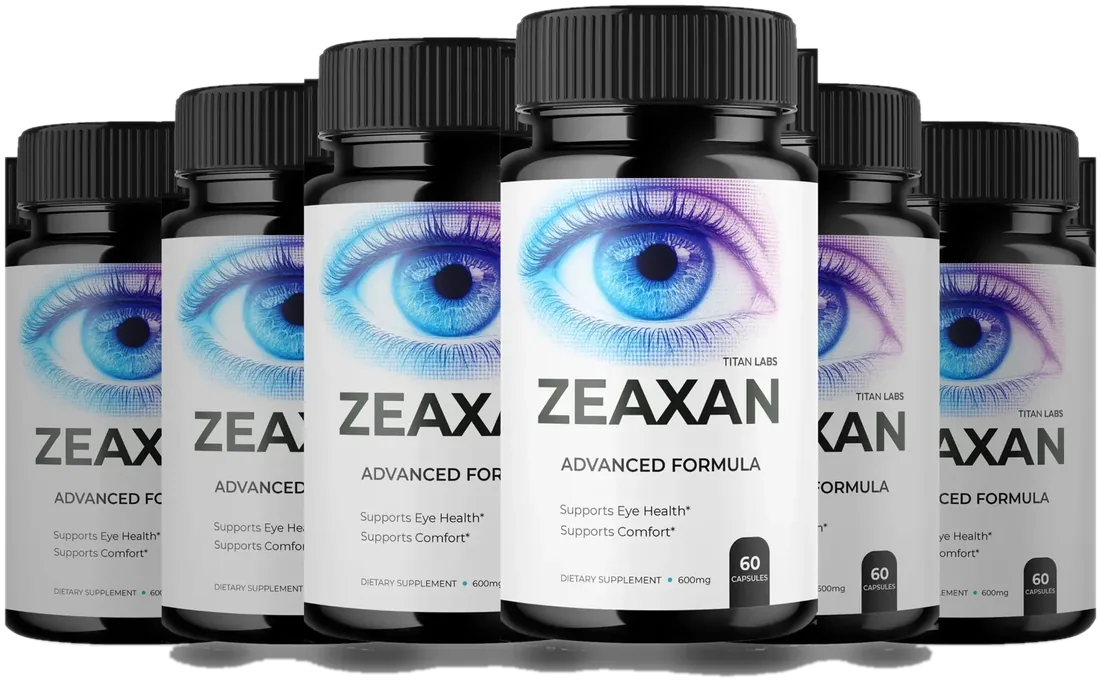
Order Zeaxan from the authorized US retailer
60 capsules in every bottle, 2 capsules a day. 60-day money-back guarantee. A real person at the order desk handles tracking, changes and refunds; the number is in the footer.