Carotenoid guide
Lutein and Zeaxanthin Explained, and What the Zeaxan Label Holds
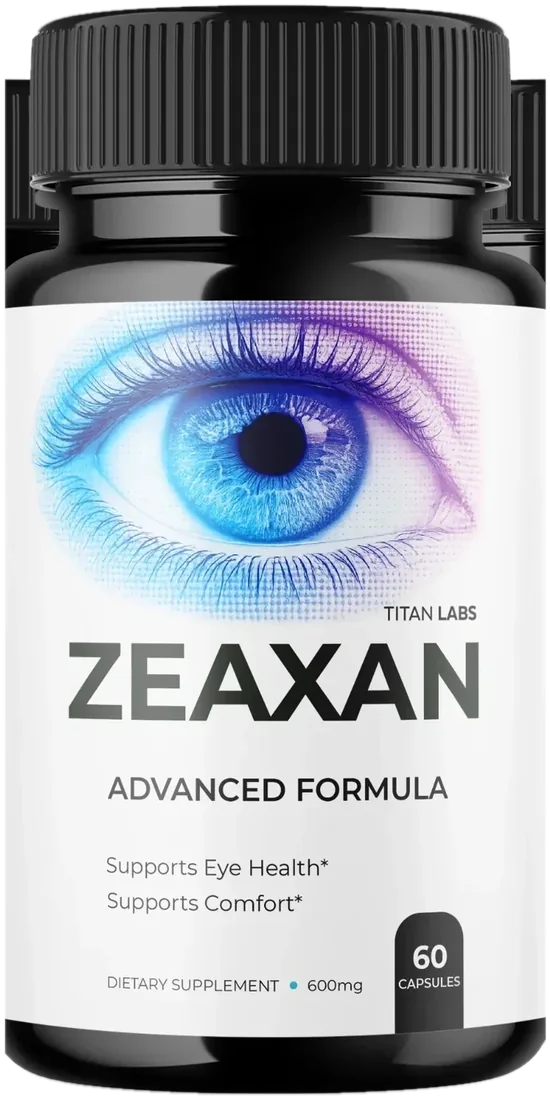
Lutein and zeaxanthin are yellow plant pigments that collect in the macula. Leafy greens, corn and egg yolks carry them. AREDS2 used 10 mg lutein and 2 mg zeaxanthin a day in people with intermediate AMD. Zeaxan prints no amounts. If its 5% markings mean pigment content, a serving holds at most about 6 mg lutein and 3 mg zeaxanthin.
What are lutein and zeaxanthin?
Lutein and zeaxanthin are two yellow plant pigments from the carotenoid family. They are close chemical cousins, and they often turn up together in the same foods.
Carotenoids give color to many fruits and vegetables. Beta-carotene, the orange pigment in carrots, is the most familiar. Lutein and zeaxanthin belong to a group of carotenoids that the body does not turn into vitamin A. They stay as they are.
Your body cannot make either one. All the lutein and zeaxanthin in your body came from what you ate, or from a supplement.
Plant pigments
Lutein and zeaxanthin are carotenoids, the natural pigments behind many yellow, orange and green plant colors.
Fat-soluble
Both dissolve in fat, not water. Eating them with a little oil or egg yolk helps the body take them up.
Found in the eye
Both collect in the macula, the small central part of the retina used for fine, straight-ahead detail.
From food only
The body does not make them. Everything in the eye came from food or supplements.
Where do lutein and zeaxanthin sit in the eye?
Lutein and zeaxanthin collect in the macula, a small area at the center of the retina. The macula handles sharp, straight-ahead detail, the kind you use to read or recognize a face.
In the macula, the two pigments form a yellow layer often called macular pigment. It filters some blue light before it reaches the cells behind it. Researchers study it for that reason, and because both pigments act as antioxidants.
That is a description of where they sit, not a promise of what a capsule does. Eating more of them, or taking them as a supplement, has not been shown to improve sight in healthy people. The only large study that tested them for an eye outcome did so in people who already had a specific eye disease. The sections below explain that study.
Which foods are good sources?
Dark leafy greens such as kale and spinach are some of the richest food sources of lutein and zeaxanthin. Other green vegetables, corn, orange peppers and egg yolks add more.
| Food | Why it is on the list | Easy way to eat it |
|---|---|---|
| Kale, spinach, collards | Dark leafy greens are some of the richest sources of both pigments | Cooked with olive oil, or in a salad with dressing |
| Broccoli, peas, romaine | Everyday green vegetables with a steady amount of lutein | As a side dish most days of the week |
| Corn and orange peppers | Yellow and orange vegetables that carry zeaxanthin | In a stir-fry, soup or salsa |
| Egg yolks | Smaller amounts, but eaten with fat, which helps uptake | Scrambled with a handful of spinach |
Since both pigments dissolve in fat, how you cook matters a little. Greens with a drizzle of oil, or eggs cooked with spinach, are easy ways to pair them with fat.
Food also brings fiber, vitamins, minerals and many other plant compounds. The NIH Office of Dietary Supplements advises that supplements can help fill gaps but cannot replace a healthy diet (NIH ODS). The everyday eye health guide covers food alongside exams, sunglasses and screen habits.
What did the AREDS2 study use, and for whom?
The AREDS2 formula used 10 mg of lutein and 2 mg of zeaxanthin a day, along with vitamins C and E, zinc and copper. It was studied in people who already had intermediate age-related macular degeneration, known as AMD (NEI).
AREDS2 was run by the National Eye Institute. It built on an earlier study, AREDS, which tested a formula of vitamins and zinc. AREDS2 tested adding lutein and zeaxanthin to that recipe.
Who the results apply to
The group matters. NEI says the original AREDS formula showed no benefit for people without AMD or with early AMD. The studies were designed for people whose eye doctor had already found intermediate disease, and who were followed under care.
So the AREDS2 amounts are a useful yardstick, not a daily target for everyone. If you think you may be a candidate for an AREDS2 formula, that is a question for your eye doctor after an exam.
How does the Zeaxan label compare?
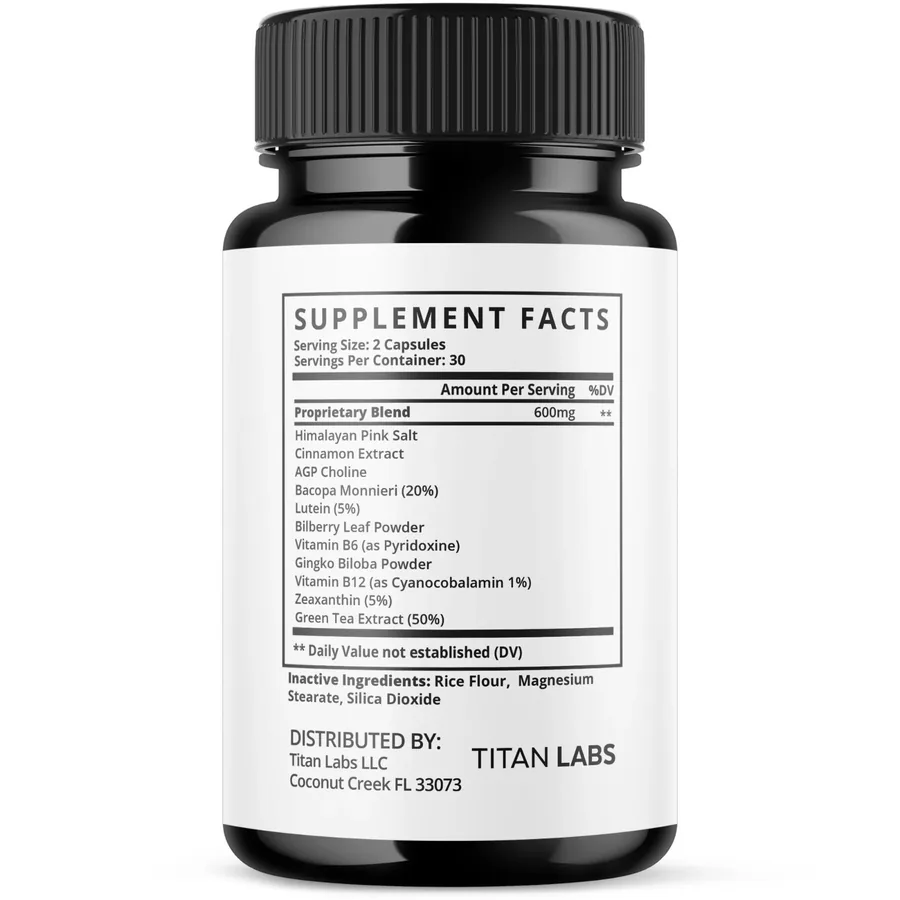
The Zeaxan label lists lutein and zeaxanthin but prints no amount for either. Both sit inside one 600 mg proprietary blend of 11 ingredients, per 2-capsule serving.
Lutein is fifth in the list and zeaxanthin is tenth. The largest single ingredient by weight is Himalayan pink salt, which is listed first. The full panel is on the Supplement Facts page.
| Point | AREDS2 formula (NEI) | Zeaxan label |
|---|---|---|
| Lutein per day | 10 mg | Not published. Blend ceiling 120 mg of a material marked 5% |
| Zeaxanthin per day | 2 mg | Not published. Blend ceiling 60 mg of a material marked 5% |
| If the 5% means pigment content | Not relevant | At most about 6 mg lutein and at most about 3 mg zeaxanthin |
| Other nutrients | Vitamins C and E, zinc and copper at set doses | Salt, cinnamon, choline, bacopa, bilberry leaf, B6, ginkgo, B12, green tea |
| Who it was studied in | People with intermediate age-related macular degeneration | No study of this product is printed |
| Amounts printed? | Yes, each nutrient | No. One 600 mg total for 11 ingredients |
Look at the last three rows. AREDS2 printed exact amounts, used a defined set of nutrients, and was tested in a named group. The Zeaxan label does none of these three things. That does not make it unsafe. It means you cannot line it up against the study.
What is the most the label could hold?
The most the label could hold is a ceiling you can work out from blend order. At the very top, lutein can weigh no more than 120 mg and zeaxanthin no more than 60 mg per serving. The real amounts are almost certainly lower.
Start with the blend total
The label prints one line: Proprietary Blend 600mg, for a 2-capsule serving.
Find each place in the list
Lutein is fifth of 11. Zeaxanthin is tenth. Blend ingredients run from most to least by weight.
Divide to get a ceiling
600 divided by 5 is 120 mg for lutein. 600 divided by 10 is 60 mg for zeaxanthin. These are upper limits, not amounts.
Apply the 5% only if it fits
If each is a material that is 5% pigment, 5% of 120 mg is 6 mg and 5% of 60 mg is 3 mg. The label does not confirm this.
Why must a later ingredient weigh less? Because US labels list blend ingredients from most to least by weight. The fifth item cannot outweigh the four above it, so it can be at most one fifth of the total. The same logic sets every other ceiling.
What do the 5% markings mean?
The 5% markings most likely describe standardized ingredient materials, such as a marigold extract that is 5% lutein by weight. The label does not say this, so any number built on it has to start with "if".
If that reading is right, the ceilings shrink a lot. A lutein material capped at 120 mg would supply at most about 6 mg of lutein. A zeaxanthin material capped at 60 mg would supply at most about 3 mg of zeaxanthin.
Put next to AREDS2, that is at most about 6 mg against 10 mg for lutein, and at most about 3 mg against 2 mg for zeaxanthin. Those are top-end ceilings under an assumption. The true amounts could be much smaller.
The other markings
The label uses the same style elsewhere: Bacopa Monnieri (20%), Green Tea Extract (50%) and Vitamin B12 (as Cyanocobalamin 1%). None of them say 20% of what, or 50% of what. The B12 marking most likely means a diluted form on a carrier. The ingredients page covers each one.
How should you use this information?
Use it to set fair expectations. Zeaxan contains some lutein and zeaxanthin, in amounts the label does not publish, next to nine other ingredients.
If lutein and zeaxanthin are your main reason for looking, you have three honest options. Eat more leafy greens and colorful vegetables. Ask your eye doctor whether a product with printed amounts suits you. Or, if you still want Zeaxan, take it as a daily habit on top of the food and the exams, not in place of them.
Any eye symptom, such as blurry vision, eye pain, flashes or floaters, needs an eye exam, not a supplement. The front label lines "Supports Eye Health" and "Supports Comfort" are the maker's words. This site does not claim the capsules change sight.
Lutein and zeaxanthin: common questions
How much lutein is in Zeaxan?
The label does not say. Lutein (5%) is fifth in a 600 mg blend, so it is at most 120 mg of that material. If the material is 5% lutein, that is at most about 6 mg.
How much zeaxanthin is in Zeaxan?
Not published. It is tenth of 11, so at most 60 mg of a material marked 5%. If that means 5% zeaxanthin, at most about 3 mg.
Is Zeaxan an AREDS2 formula?
No. AREDS2 printed exact amounts of lutein, zeaxanthin, vitamins C and E, zinc and copper. Zeaxan is a different blend and has not been studied as AREDS2.
Who was AREDS2 meant for?
People with intermediate age-related macular degeneration. NEI says the original AREDS formula showed no benefit for people without AMD or with early AMD.
Can I get lutein and zeaxanthin from food?
Yes. Kale, spinach, collards, broccoli, peas, corn, orange peppers and egg yolks all carry them.
Do lutein and zeaxanthin improve eyesight?
That has not been shown in healthy people, and this site makes no such claim. Changes in sight need an eye exam.
Sources for this page
Keep reading
Ready when you are
Order Zeaxan from the authorized US retailer
60 capsules in every bottle, 2 capsules a day. 60-day money-back guarantee. A real person at the order desk handles tracking, changes and refunds; the number is in the footer.