Guides hub
Zeaxan Guides: Where to Start Reading
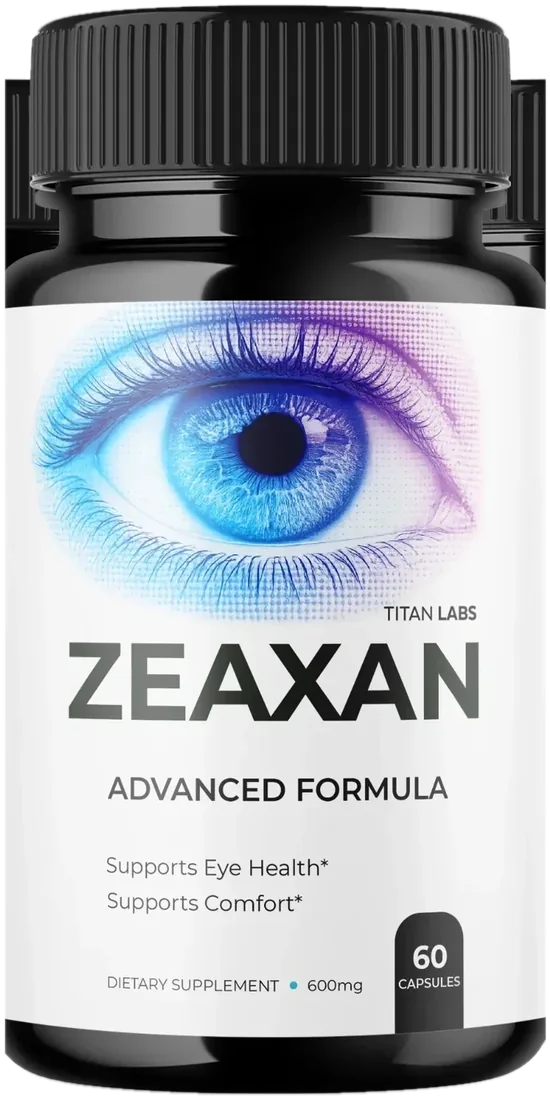
The Zeaxan guides hub links six core guides and three blog posts. New readers can start with the everyday eye health guide, then lutein and zeaxanthin, the Supplement Facts page, side effects and how to use. All are built from the label: a 600 mg blend of 11 ingredients per 2-capsule serving, 30 servings a bottle.
Where should you start with the Zeaxan guides?
Start with the everyday eye health guide for the big picture, or the Supplement Facts page if you want the label first. Every guide here is built from the Zeaxan bottle and linked public research, in plain words.
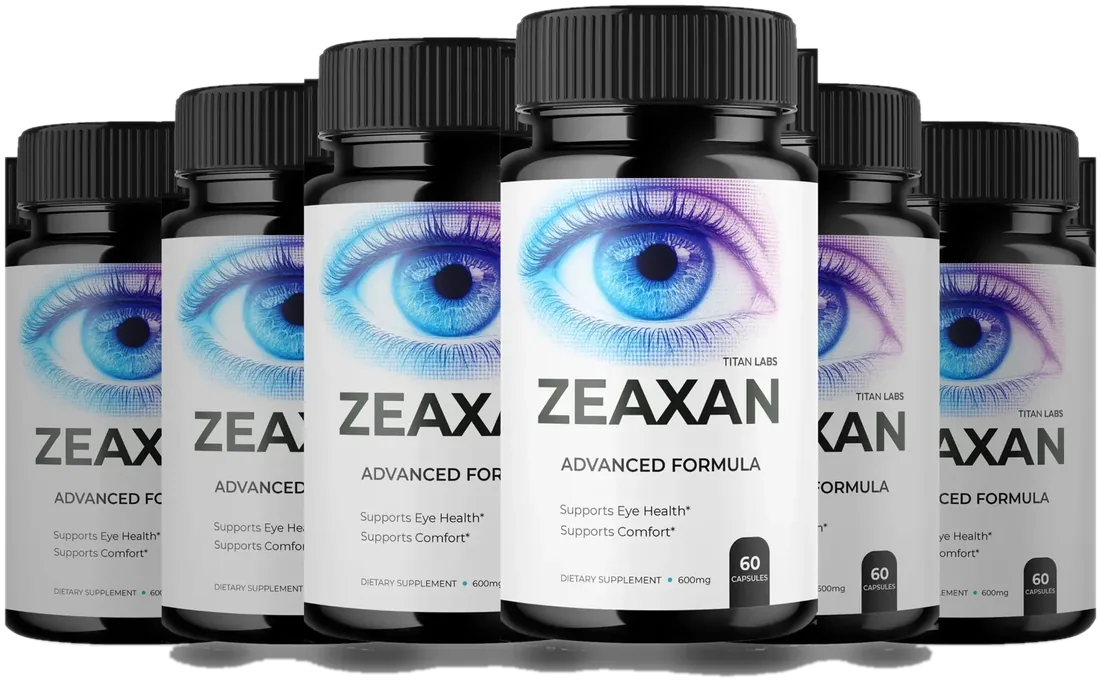
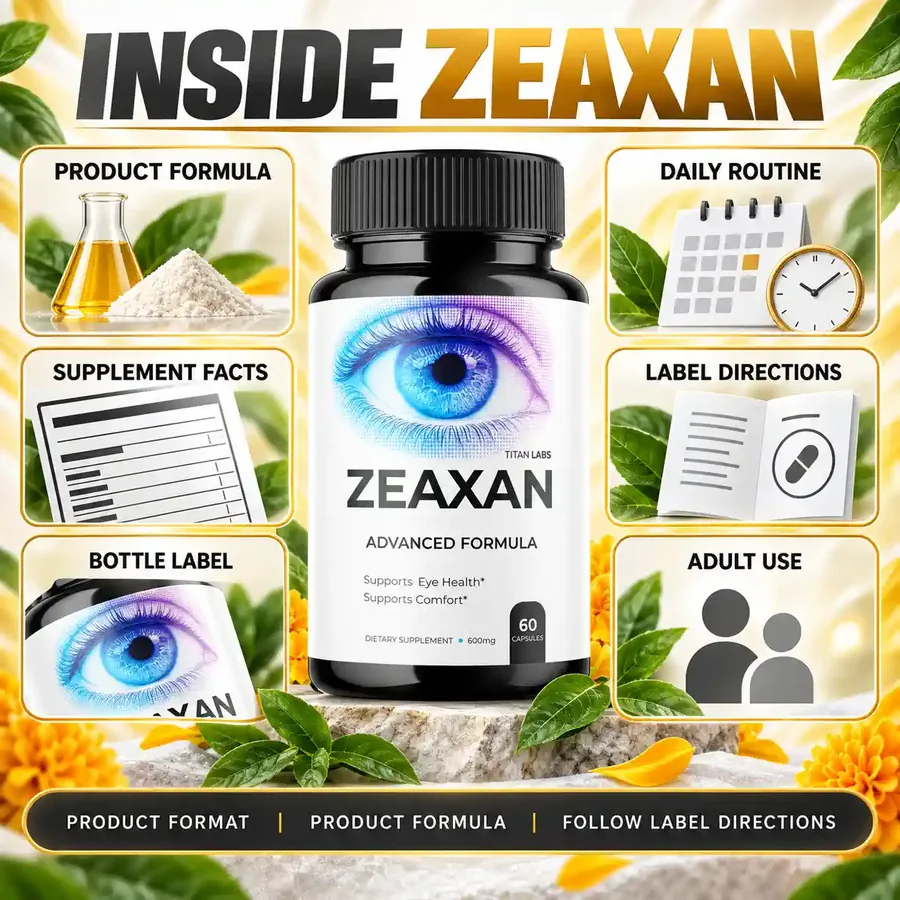
The hub gathers six core guides and three blog posts. All of them cover one product: Zeaxan Advanced Formula, a 60-capsule bottle distributed by Titan Labs LLC. Each 2-capsule serving holds a 600 mg blend of 11 ingredients. At the label dose, one bottle lasts 30 days.
The guides do not assume you will buy anything. Some readers finish them and decide the product is not for them. That is a useful answer too.
Which Zeaxan guides cover the basics?
Six core guides cover the basics: eye habits, the two pigments, the panel, the ingredients, daily use and safety. Each one stands alone, so you can read them in any order.
Everyday eye health guide
Eye exams, sunglasses, screen breaks, not smoking, leafy greens, and the warning signs that need care the same day.
Read moreLutein and zeaxanthin explained
What the two yellow pigments are, which foods carry them, what AREDS2 used, and how the Zeaxan label compares.
Read moreSupplement Facts, line by line
The 2-capsule serving, the 600 mg blend, all 11 ingredients in label order and the three inactive ingredients.
Read moreZeaxan ingredients
One card per ingredient, from Himalayan pink salt down to green tea extract, with the most each one can weigh.
Read moreHow to use Zeaxan
The suggested use in the label's own words, the between-meals timing, and a simple way to build the habit.
Read moreSide effects and interactions
What each ingredient may do, which medicines to raise with a doctor, and who the label says should ask first.
Read moreThe first two are general. They explain eye care habits and the two carotenoids in a way you can use on any product or none. The other four apply that to Zeaxan, line by line.
Two facts shape almost every page. First, the label prints one 600 mg total for all 11 ingredients and no single amounts. Second, Himalayan pink salt is listed first, so it is the largest single ingredient by weight. Zeaxanthin, the ingredient the name points to, sits tenth.
What do the Zeaxan blog posts add?
The three blog posts go deeper on single topics: the blend order, the research and the timing. They are longer reads for when a core guide raises a question.
Why salt is listed first
Blend order runs from most to least by weight. Here is what it means that pink salt leads an eye formula.
Read moreEleven ingredients, one review
Every ingredient's ceiling in the 600 mg blend, set beside what published research used or found.
Read moreBetween meals or after meals?
The label and a brand panel disagree on timing. Which one to follow, and a routine that fits a normal day.
Read moreThe salt post
US labels list blend ingredients from most to least by weight. That rule lets you work out a ceiling for each one. Pink salt can be anything from about 55 mg up to the whole 600 mg. The post explains why a mineral salt might lead an eye formula, and what the label does not say about it.
The research post
The research post is the one to read for sources. It lines up all 11 ingredients against what studies used. Take lutein. The large AREDS2 study used 10 mg a day, together with 2 mg of zeaxanthin and other nutrients, in people who already had intermediate age-related macular degeneration (NEI). That is a very specific group, and the post says so.
It also covers ingredients that have nothing to do with eyes. Bacopa research, for example, looked at memory and processing speed (Kongkeaw et al., 2014).
The timing post
The label says "between meals". One brand panel says "after meal". The post explains why the label wins and offers a daily routine that fits either a desk job or shift work.
Which guide answers your question?
Find your question in the table below and go straight to that guide. Each row names the one question the page is built to answer.
| Guide or post | The question it answers | Read it when |
|---|---|---|
| Everyday eye health | What daily habits matter most for adult eyes? | You want the big picture first |
| Lutein and zeaxanthin | What are these two pigments, and how much does the label hold? | The product name made you curious |
| Supplement Facts | What exactly is printed on the back panel? | You want the raw label |
| Ingredients | What is each of the 11 blend ingredients? | A name on the label is new to you |
| How to use | How and when do I take the capsules? | Your bottle has arrived |
| Side effects | Does it suit my health and my medicines? | You take medicine or have a condition |
| Blog: salt listed first | Why does salt lead the blend? | The first line on the panel surprised you |
| Blog: research review | What do studies say about each ingredient? | You want sources, not summaries |
| Blog: between or after meals | Which timing should I follow? | The label and the panel confused you |
For short answers, the FAQ page collects common questions in one place. For ratings and buyer comments, see the reviews page. Those numbers come from the order desk and are not independently verified.
What is a good reading path through the guides?
A good path runs from general to specific: your eyes, the two pigments, this label, your health, then the routine. It takes you from "what helps my eyes day to day" to "does this bottle suit me" in five steps.
Start with your eyes, not the bottle
Read the everyday eye health guide. Exams, sunlight, screens, smoking and food come before any capsule.
Learn the two pigments
The lutein and zeaxanthin guide explains what they are and what the large NEI study used, and for whom.
Read this label
Go through the Supplement Facts page: 2 capsules per serving, 30 servings, one 600 mg blend of 11 ingredients.
Check your health fit
Read the side effects page, especially if you take a blood thinner, a diabetes medicine or a heart medicine.
Plan the routine
If you go ahead, the how-to-use page and the timing post help you set a daily slot that matches the label.
You can stop at any step. If the label or the safety page shows that Zeaxan is not a fit for you, the reading still pays off. You will know what to look for on any eye formula.
What if you only have five minutes?
If you only have five minutes, read the Supplement Facts page and the side effects page. Together they cover what is in the bottle and whether it suits your health.
Here is the short version. One bottle holds 60 capsules, 30 days at 2 a day, taken "between meals" per the label. Each serving has a 600 mg blend of Himalayan pink salt, cinnamon extract, AGP choline, bacopa, lutein, bilberry leaf powder, vitamin B6, ginkgo, vitamin B12, zeaxanthin and green tea extract. No single amounts are printed.
The label marks lutein and zeaxanthin "5%". If that means a material that is 5% pigment, the serving holds at most about 6 mg of lutein and at most about 3 mg of zeaxanthin. The label does not confirm it. Orders carry a 60-day money-back window; confirm the written terms at checkout.
How are the Zeaxan guides written?
Every guide is written by the Zeaxan Editorial Desk from the label first. Research is linked, brand claims are quoted, and anything the label leaves out is called "not published".
- Label text is quoted word for word, including the suggested use and the caution.
- Brand lines such as "Supports Eye Health" are quoted and marked as the maker's words, not as results.
- Blend ceilings are shown as the most an ingredient can weigh, never as the real amount.
- Studies are linked, and each one says who was studied and what dose was used.
- Order-desk review numbers are labeled as not independently verified.
None of the guides say the capsules improve sight or protect against any eye disease. The front label says "Supports Eye Health" and "Supports Comfort". A brand panel adds "Vision Performance Support". Those are the maker's words, and no study is printed beside them.
Dietary supplements do not need FDA review for effect before they are sold (FDA). That is one more reason each guide shows its sources. Guides are reviewed when the label, packs or guarantee terms change. Each guide here was last reviewed on September 30, 2026.
Zeaxan guides: common questions
Which Zeaxan guide should I read first?
The everyday eye health guide for the big picture, or the Supplement Facts page if you want the label first.
Are the guides written by an eye doctor?
No. They are written by the Zeaxan Editorial Desk from the label and linked public research. Take eye questions to your own eye doctor.
Do the guides say Zeaxan improves vision?
No. None of the guides make that claim. Brand lines such as "Vision Performance Support" are quoted as the maker's words, not as results.
Where do I find short answers?
The FAQ page collects short answers to the common questions about the label, the dose and orders.
How often are the guides updated?
When the label, packs or guarantee terms change. Each guide here was last reviewed on September 30, 2026.
Sources for this page
- National Eye Institute. About AREDS and AREDS2. Source
- Kongkeaw C, Dilokthornsakul P, Thanarangsarit P, Limpeanchob N, Scholfield CN. Meta-analysis of randomized controlled trials on cognitive effects of Bacopa monnieri extract. J Ethnopharmacol, 2014. Source
- U.S. Food and Drug Administration. Dietary Supplements. Source
Keep reading
Ready when you are
Order Zeaxan from the authorized US retailer
60 capsules in every bottle, 2 capsules a day. 60-day money-back guarantee. A real person at the order desk handles tracking, changes and refunds; the number is in the footer.