Dose and research
How Much Zeaxanthin Per Day? What the Zeaxan Label and Studies Used
Our sources set no recommended daily amount for zeaxanthin. The AREDS2 formula used 2 mg of zeaxanthin and 10 mg of lutein a day, in people with intermediate AMD. Zeaxan prints no amount. At most about 3 mg per serving if its 5% mark means pure pigment. Ask your doctor.
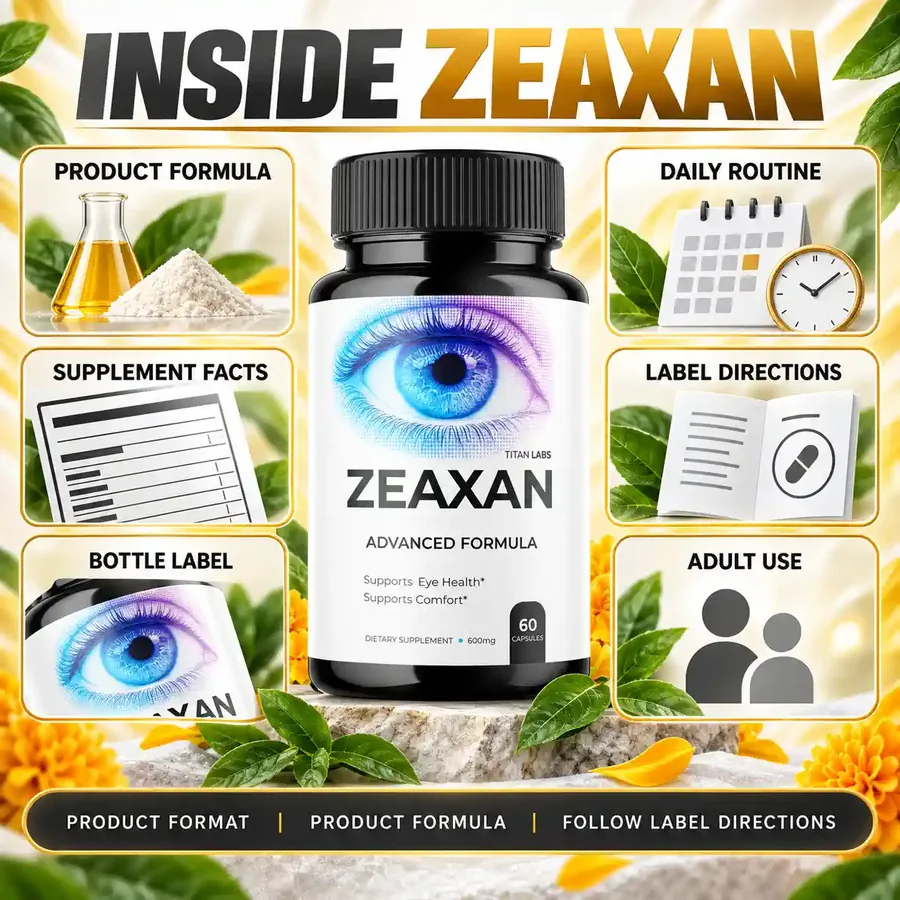
How much zeaxanthin should you take per day?
There is no daily figure in the sources we use, so we will not make one up. The questions people type, such as how many mg of zeaxanthin per day, for seniors, for eye health or for macular degeneration, all come back to the same answer: it depends on who you are and what your eye doctor says.
What we do have is one well-known study dose. The AREDS2 formula used 2 mg of zeaxanthin a day, together with 10 mg of lutein, vitamins C and E, zinc and copper. Its participants already had intermediate age-related macular degeneration (NEI).
That is a yardstick, not a target for everyone. The NEI notes that the earlier AREDS formula did not help people with no AMD or early AMD. If you wonder whether you qualify for an AREDS2-style formula, take that to your eye doctor after an exam.
Key facts
- No recommended daily amount of zeaxanthin is published in our sources.
- In AREDS2, people with intermediate AMD took 10 mg lutein and 2 mg zeaxanthin daily, plus other nutrients (NEI).
- Zeaxan's zeaxanthin is tenth of 11 in a 600 mg blend: at most 60 mg of a material marked 5%.
- If 5% means pure zeaxanthin, that is at most about 3 mg per serving. The label does not confirm it.
- Lutein is fifth: at most 120 mg of a 5% material, about 6 mg if the mark means pure pigment.
- Do not exceed the label dose of 2 capsules a day.
How much zeaxanthin is in Zeaxan?
The label does not say. Zeaxanthin (5%) is the tenth of 11 ingredients inside one 600 mg proprietary blend, and the blend gives only a total, not a weight for each name.
You can work out a ceiling. Blend ingredients run from most to least by weight, so the tenth place cannot weigh more than 600 divided by 10. That is 60 mg of the material. The 5% mark most likely describes a standardized material, but the label does not say. If it means 5% pure zeaxanthin, then 5% of 60 mg is 3 mg.
Both numbers are upper limits built on an if. The real amount could be much lower, and nobody outside the maker knows it. If you want an exact figure for zeaxanthin, this label cannot provide one.
| Pigment | Zeaxan ceiling per serving | If the 5% mark means pure pigment | AREDS2 daily dose |
|---|---|---|---|
| Zeaxanthin (10th) | Up to 60 mg of material | About 3 mg at most | 2 mg |
| Lutein (5th) | Up to 120 mg of material | About 6 mg at most | 10 mg |
Can you take too much zeaxanthin?
The sources we use give no upper limit for zeaxanthin, and they say nothing about taking too much of it. So we cannot give you a safe daily maximum, and a page that does is guessing.
Zeaxan carries a dose limit of its own: 2 capsules a day, and the label says not to go over it. Taking more would not only raise any zeaxanthin you get. It would raise every other ingredient, including ginkgo and green tea extract.
Other labels you may use matter too. Using two eye formulas together can stack lutein and zeaxanthin twice. That is not known to be harmful at food-like amounts in our sources, but it rarely makes sense to pay twice. Bring every label to your doctor or pharmacist.
How do other ingredients change the dose picture?
Zeaxanthin is one of 11 names, and some of the others have set daily figures in the NIH notes. Vitamin B6 has an adult upper limit of 100 mg a day (NIH ODS, 2023). Choline has an upper limit of 3,500 mg a day, and men need about 550 mg a day from all sources (NIH ODS). For B12, no upper limit is set (NIH ODS).
Zeaxan prints no amount for B6, B12 or choline, so these limits are for your own tally across everything you take. The point is that the zeaxanthin question is only one part of the dose question for this product.
Is a food-based amount different from a capsule?
People often ask how much zeaxanthin is in an egg, in spinach, in kale or in goji berries. We publish no such figures, because our sources do not give them. We can say which foods carry it: dark leafy greens such as kale and spinach, other green vegetables, corn, orange peppers and egg yolks.
Both pigments dissolve in fat. A little oil with greens, or egg yolk with spinach, is an easy way to pair them. The food post goes through this in more detail.
What should you do before choosing a dose?
Get an eye exam
Only an eye doctor can tell you whether your eyes call for any particular formula.
Ask what your goal is
If the goal is a general daily habit, the label dose is the one to follow. If it is a diagnosed condition, follow your doctor.
Read the label for amounts
A label that prints each milligram lets you compare with study doses. Zeaxan does not.
Tally everything you take
Add up B6, choline and any other eye formula before you add another bottle.
How are the ceilings worked out for all 11 ingredients?
Divide 600 mg by the place in the list. Place 1 is up to 600 mg, place 2 up to 300 mg, place 3 up to 200 mg, place 4 up to 150 mg, place 5 up to 120 mg, place 6 up to 100 mg, place 7 up to 86 mg, place 8 up to 75 mg, place 9 up to 67 mg, place 10 up to 60 mg and place 11 up to 55 mg.
Salt, in first place, also has a floor of about 55 mg, since it has to weigh at least what each of the other ten weighs. All 11 share the same 600 mg, so if salt takes a large share, the later ingredients sit well below their ceilings.
How do the percent marks change the math?
The label does not explain the 5%, 20%, 50% and 1% marks. The likeliest reading is that they mark standardized materials. If so, each ceiling shrinks again: five percent of 120 mg is 6 mg, and five percent of 60 mg is 3 mg.
Green tea extract is marked 50%. If that refers to catechins, a 55 mg ceiling would be about 27 mg at most. These are all ifs. We show them so you can see the shape of the unknown, not to suggest the real amounts.
What are the dose facts at a glance?
The study figures come from the NEI and NIH notes in the site's source list. The Zeaxan figures are label facts or ceilings worked out from label order.
| Item | Figure | Status |
|---|---|---|
| Zeaxan dose | 2 capsules a day | Label |
| Zeaxanthin amount in Zeaxan | Not published | Ceiling 60 mg of material |
| AREDS2 zeaxanthin | 2 mg a day | NEI |
| AREDS2 lutein | 10 mg a day | NEI |
| Vitamin B6 upper limit | Cap of 100 mg a day, adults | NIH ODS, 2023 |
| Choline upper limit | 3,500 mg a day | NIH ODS |
| Price and guarantee | Shown at checkout; 60-day money-back | Seller's pack |
Frequently asked questions
How much zeaxanthin should I take daily?
Our sources set no daily amount. AREDS2 used 2 mg a day with other nutrients in people with intermediate AMD. Ask your eye doctor what suits you.
How many mg of zeaxanthin are in Zeaxan?
Not published. If its 5% mark means pure zeaxanthin, a serving holds at most about 3 mg.
Is 10 mg of zeaxanthin safe?
Our sources do not address that amount. Ask your doctor, and note that AREDS2 used 2 mg of zeaxanthin a day.
How much zeaxanthin is safe to take?
No upper limit for zeaxanthin is given in our sources. Zeaxan's own label says not to exceed 2 capsules a day.
Can I take lutein and zeaxanthin together?
They often appear together in foods and in formulas, and Zeaxan holds both. Check every label you use so you do not double up.
Is there a different dose for seniors?
The Zeaxan label sets no upper age and no separate dose. Older adults often take more medicines, so check with a doctor or pharmacist.
Sources for this page
- National Eye Institute. About AREDS and AREDS2. Source
- NIH Office of Dietary Supplements. Vitamin B6: Fact Sheet for Consumers. Updated June 2023. Source
- NIH Office of Dietary Supplements. Vitamin B12: Fact Sheet for Consumers. Source
- NIH Office of Dietary Supplements. Choline: Fact Sheet for Consumers. Source
- NIH Office of Dietary Supplements. Dietary Supplements: What You Need to Know. Source
Keep reading
Our view
Our view is that no honest page can give you one right number of milligrams of zeaxanthin, and this one will not try. The best-known study dose is 2 mg, in a defined group, inside a larger formula.
Zeaxan does not print its own figure, so the most we can offer is a ceiling and a warning not to treat it as a promise. If a precise dose matters to you, ask your eye doctor and look for a label that prints amounts. If a steady daily habit is what you want, follow the label dose and no more.
Last updated
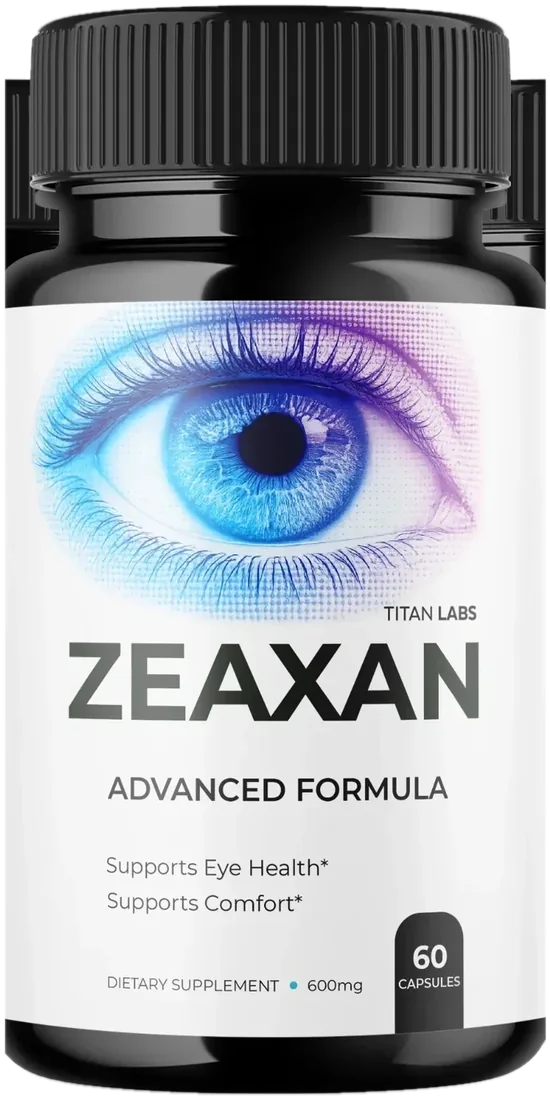
Ready when you are
See Zeaxan's packs and guarantee
The order page shows each pack, the full price and the written guarantee terms before you pay.
We earn money when you buy through our order links. The price you pay is the same.