Research review
Zeaxan's 11 Ingredients, Checked Against the Research
Zeaxan holds 11 ingredients in one 600 mg blend with no single amounts. Only lutein and zeaxanthin link to large eye research: AREDS2 used 10 mg and 2 mg a day in people with intermediate AMD. On this label they are capped at 120 mg and 60 mg of 5% materials. Bacopa, ginkgo and choline research is about the brain or nutrition, not eyes.
What are the 11 ingredients in Zeaxan?
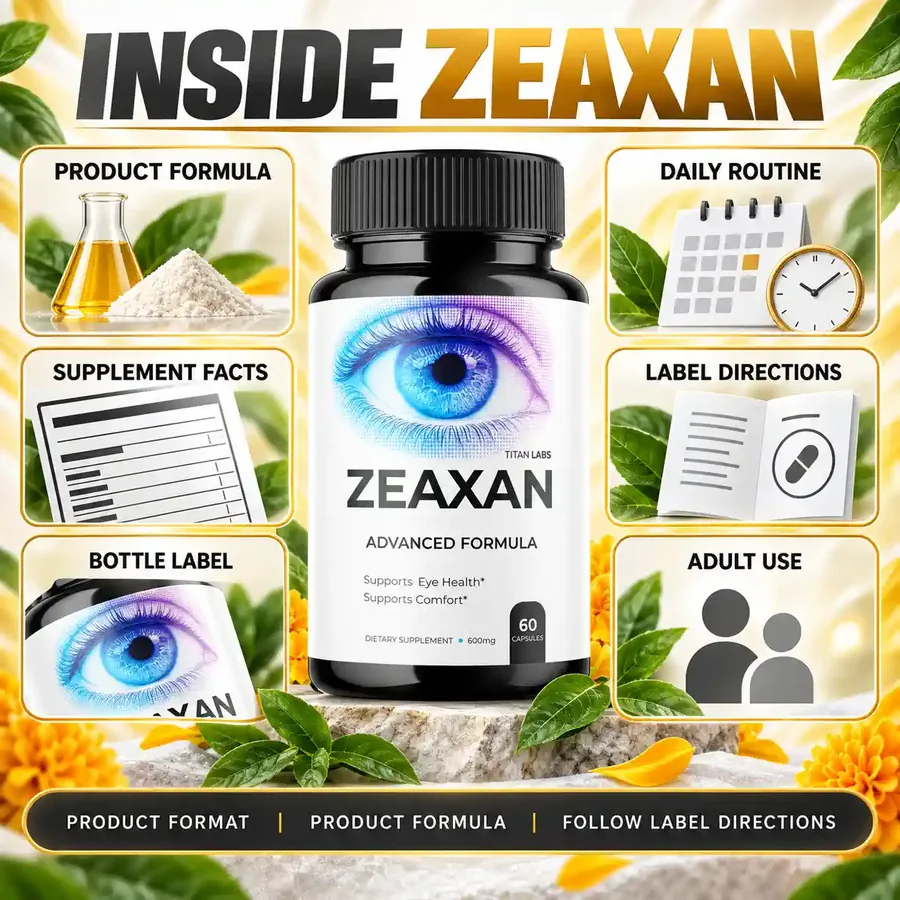
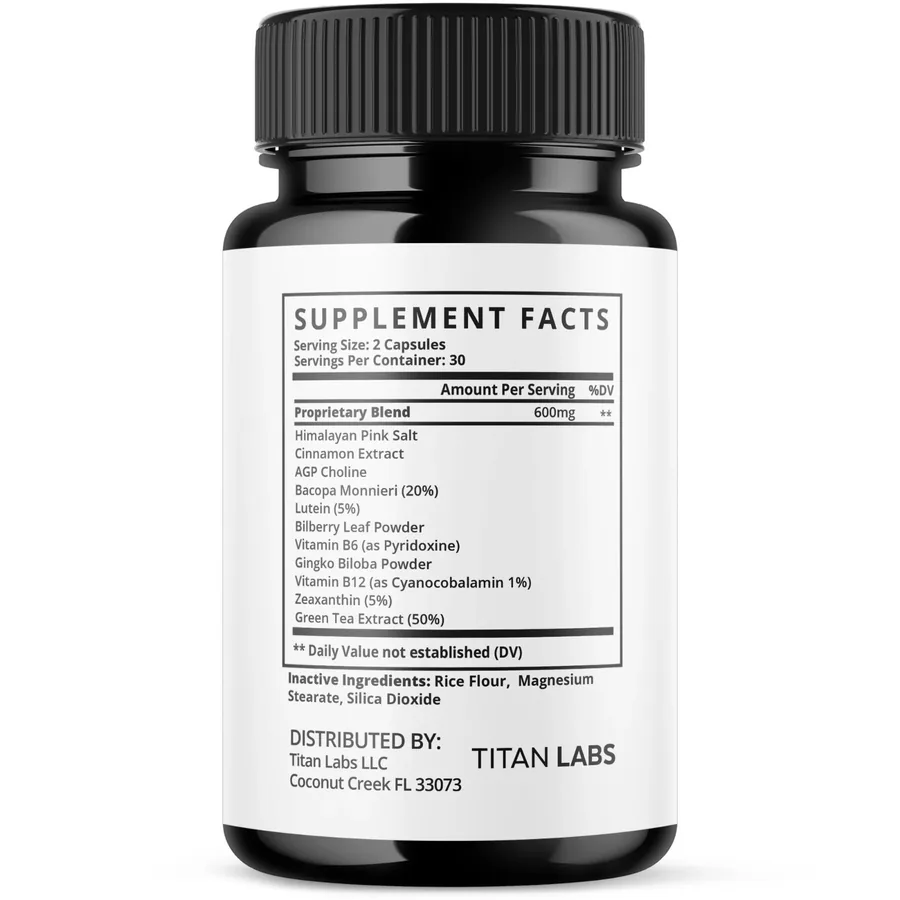
Zeaxan has 11 ingredients in one 600 mg blend per 2-capsule serving. In label order they are Himalayan pink salt, cinnamon extract, AGP choline, bacopa, lutein, bilberry leaf powder, vitamin B6, ginkgo, vitamin B12, zeaxanthin and green tea extract.
The label prints no amount for any single one. The inactive ingredients are rice flour, magnesium stearate and silica dioxide. The capsule shell material is not stated.
How are the ceilings worked out?
Each ceiling is the blend total divided by the ingredient's place in the list. Blend ingredients run from most to least by weight, so the fifth item can weigh no more than one fifth of 600 mg, or 120 mg.
Ceilings are upper limits, not real amounts. In practice, the first ingredient often takes a large share, which leaves less for the rest. The salt post explains the math in full.
Several names also carry a percentage: bacopa 20%, lutein 5%, B12 1%, zeaxanthin 5% and green tea 50%. These most likely describe standardized materials, but the label does not say. So a ceiling of 120 mg for "Lutein (5%)" is a ceiling for the material, not for pure lutein.
How do all 11 compare with research?
For most of the 11, the research either used a different group of people, measured something other than eyes, or found too little evidence to judge. The table puts them side by side.
| Ingredient (label order) | Ceiling per 2 capsules | What research used or found | Source |
|---|---|---|---|
| 1. Himalayan pink salt | 600 mg | Not studied as an eye nutrient; adds a little sodium | NIH ODS |
| 2. Cinnamon extract | 300 mg | Research does not clearly support it for any condition | NCCIH 2024 |
| 3. AGP choline | 200 mg | Adequate intake for men about 550 mg a day from all sources; upper limit 3,500 mg | NIH ODS |
| 4. Bacopa (20%) | 150 mg | 9 trials of standardized extract, 12 weeks or more: small gains in processing speed | Kongkeaw 2014 |
| 5. Lutein (5%) | 120 mg | AREDS2 used 10 mg a day in people with intermediate AMD | NEI |
| 6. Bilberry leaf powder | 100 mg | Fruit extracts did not improve night vision in healthy people; leaves may be unsafe in high doses or long use | NCCIH 2024 |
| 7. Vitamin B6 | 86 mg | Men need 1.3 to 1.7 mg a day; upper limit 100 mg | NIH ODS 2023 |
| 8. Ginkgo | 75 mg | No conclusive evidence for any condition | NCCIH 2025 |
| 9. Vitamin B12 (1%) | 67 mg of the 1% form | Adults need 2.4 mcg a day; no upper limit set | NIH ODS |
| 10. Zeaxanthin (5%) | 60 mg | AREDS2 used 2 mg a day in people with intermediate AMD | NEI |
| 11. Green tea extract (50%) | 55 mg | Rare liver injury with extract capsules; EFSA flagged 800 mg EGCG a day or more | EFSA 2018 |
What does research say about lutein and zeaxanthin?
The main research is the NEI's AREDS2 study. Its formula used 10 mg of lutein and 2 mg of zeaxanthin a day, with vitamins C and E, zinc and copper, in people with intermediate age-related macular degeneration (NEI).
NEI says the original AREDS formula showed no benefit for people without AMD or with early AMD. So the research sets a yardstick for a specific group under an eye doctor's care. It is not evidence that any capsule helps healthy eyes.
On the Zeaxan label, lutein is capped at 120 mg of a 5% material and zeaxanthin at 60 mg of a 5% material. If both are 5% pigment, that is at most about 6 mg of lutein and at most about 3 mg of zeaxanthin. The label does not confirm it. Zeaxan is not an AREDS2 formula. The lutein and zeaxanthin guide has the full comparison.
What does research say about bilberry leaf?
Most bilberry research used fruit extracts, not leaf, and rigorous studies found bilberry did not improve night vision in healthy people (NCCIH, 2024). Zeaxan uses bilberry leaf powder, at most 100 mg.
The leaf and the berry are different materials. NCCIH notes that bilberry leaves may be unsafe in high doses or with long use.
What does research say about bacopa, ginkgo and choline?
The research on these three is about the brain or about nutrition, not eyes. None of it supports an eye claim, and none is made here.
Bacopa
A review of 9 trials found that standardized bacopa extract, taken for 12 weeks or more, gave small gains in processing speed (Kongkeaw et al., 2014). That is a memory and thinking finding. Zeaxan lists "Bacopa Monnieri (20%)" at a ceiling of 150 mg, and the label does not say 20% of what. Bacopa may cause stomach upset in some people.
Ginkgo
NCCIH says there is no conclusive evidence that ginkgo helps any health condition (NCCIH, 2025). The label spells it "Gingko Biloba Powder" and gives no amount. Its ceiling is 75 mg.
AGP choline
"AGP Choline" most likely means alpha-GPC, a common choline source, though the label does not spell it out. Men need about 550 mg of choline a day from all sources, and the upper limit is 3,500 mg (NIH ODS).
What about vitamins B6 and B12?
Both vitamins are listed inside the blend with no amount and no % Daily Value, which is unusual.
Men need 1.3 to 1.7 mg of vitamin B6 a day. The upper limit is 100 mg, and long use of high doses can harm nerves (NIH ODS, 2023). The ceiling here is 86 mg of blend weight. If you take a multivitamin or a B-complex too, add up your B6 and share the total with your doctor.
Adults need 2.4 mcg of vitamin B12 a day, and no upper limit is set (NIH ODS). The label lists "Cyanocobalamin 1%", which most likely means a diluted form on a carrier.
What about salt, cinnamon and green tea extract?
None of these three is studied as an eye ingredient.
Himalayan pink salt
Pink salt is mostly sodium chloride. It is the largest single ingredient, somewhere from about 55 mg to 600 mg per serving. The label prints no sodium line.
Cinnamon extract
NCCIH says research does not clearly support cinnamon for any health condition (NCCIH, 2024). The label does not name the type of cinnamon. Its ceiling is 300 mg.
Green tea extract
Rare cases of liver injury have been linked to green tea extract capsules (NCCIH, 2025). EFSA found that 800 mg or more of EGCG a day raised liver markers, and that taking extracts on an empty stomach may raise exposure (EFSA, 2018). Here green tea extract is at most 55 mg of a 50% material, far below that level.
Which interactions should you raise with a doctor?
Three ingredients have known interactions worth raising before you start. The label also asks anyone with a known medical condition to consult a physician first.
The label rules out use during pregnancy or nursing and by anyone under 18 without a physician's advice. The side effects page covers each ingredient in more detail.
What does the review add up to?
The review adds up to a mixed label. Two ingredients, lutein and zeaxanthin, link to real eye research, but that research used printed doses in people with intermediate AMD. The rest link to brain, nutrition or general research, or to none.
That does not settle whether Zeaxan suits you. It sets fair expectations. The front label says "Supports Eye Health" and "Supports Comfort". Those are the maker's words, and no study of this product is printed.
Any eye symptom, such as blurry vision, eye pain, flashes or floaters, needs an eye exam, not a supplement.
Questions people ask about this
Which Zeaxan ingredients are linked to eye research?
Lutein and zeaxanthin, through the NEI's AREDS2 study in people with intermediate AMD. Bilberry research used fruit extracts and found no night vision gain in healthy people.
Is bacopa in Zeaxan for the eyes?
Its research is about memory and processing speed, not eyes. Nine trials found small gains in processing speed after 12 weeks or more.
How much vitamin B6 is in Zeaxan?
Not published. The ceiling is 86 mg of blend weight. The upper limit for adults is 100 mg a day from all sources.
Is the green tea extract a liver concern?
Rare liver injury has been linked to extract capsules. Here it is at most 55 mg of a 50% material, far below the 800 mg EGCG level EFSA flagged.
Sources for this page
- National Eye Institute. About AREDS and AREDS2. Source
- National Center for Complementary and Integrative Health. Bilberry: Usefulness and Safety. Updated November 2024. Source
- Kongkeaw C, Dilokthornsakul P, Thanarangsarit P, Limpeanchob N, Scholfield CN. Meta-analysis of randomized controlled trials on cognitive effects of Bacopa monnieri extract. J Ethnopharmacol, 2014. Source
- National Center for Complementary and Integrative Health. Ginkgo: Usefulness and Safety. Updated February 2025. Source
- NIH Office of Dietary Supplements. Choline: Fact Sheet for Consumers. Source
- NIH Office of Dietary Supplements. Vitamin B6: Fact Sheet for Consumers. Updated June 2023. Source
- NIH Office of Dietary Supplements. Vitamin B12: Fact Sheet for Consumers. Source
- National Center for Complementary and Integrative Health. Cinnamon: Usefulness and Safety. Updated November 2024. Source
- National Center for Complementary and Integrative Health. Green Tea: Usefulness and Safety. Updated February 2025. Source
- EFSA Panel on Food Additives and Nutrient Sources. Scientific opinion on the safety of green tea catechins. EFSA Journal, 2018. Source
- NIH Office of Dietary Supplements. Dietary Supplements: What You Need to Know. Source
Keep reading
Ready when you are
Order Zeaxan from the authorized US retailer
60 capsules in every bottle, 2 capsules a day. 60-day money-back guarantee. A real person at the order desk handles tracking, changes and refunds; the number is in the footer.