Label reading
Why Himalayan Pink Salt Is Listed First on Zeaxan
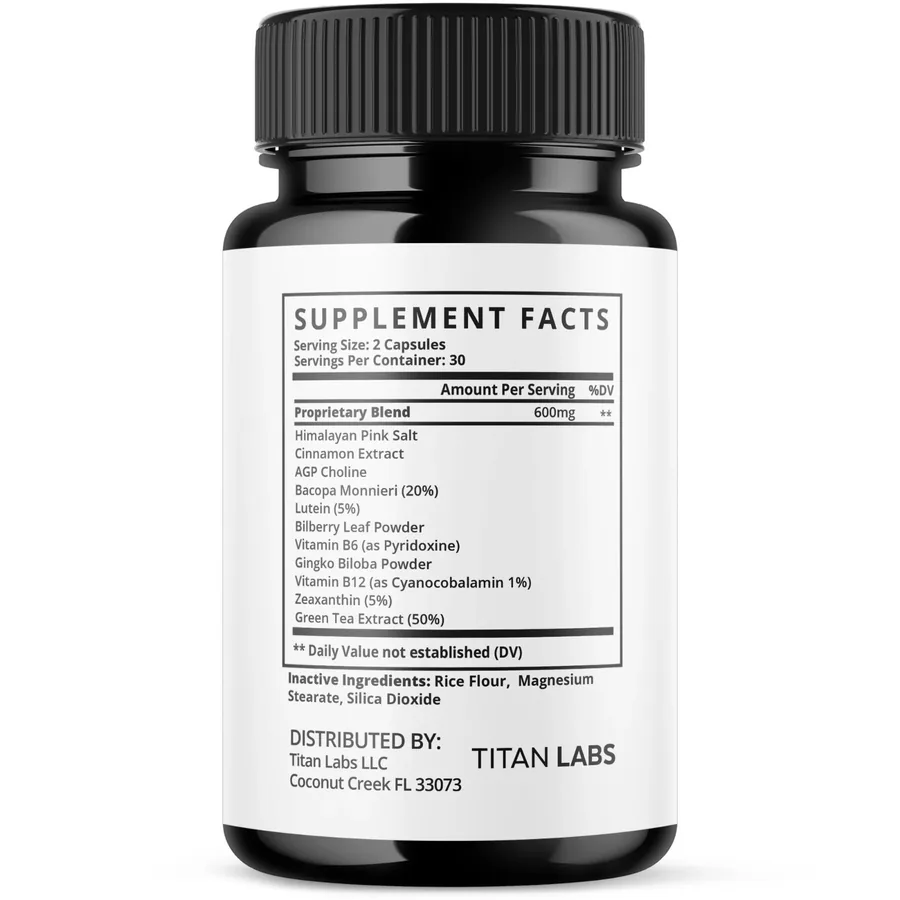
Himalayan pink salt is listed first because blend ingredients run from most to least by weight, so salt is the largest single ingredient in the 600 mg Zeaxan blend. It weighs at least about 55 mg and at most 600 mg per 2-capsule serving. Lutein, fifth, is capped at 120 mg of a 5% material. Zeaxanthin, tenth, is capped at 60 mg.
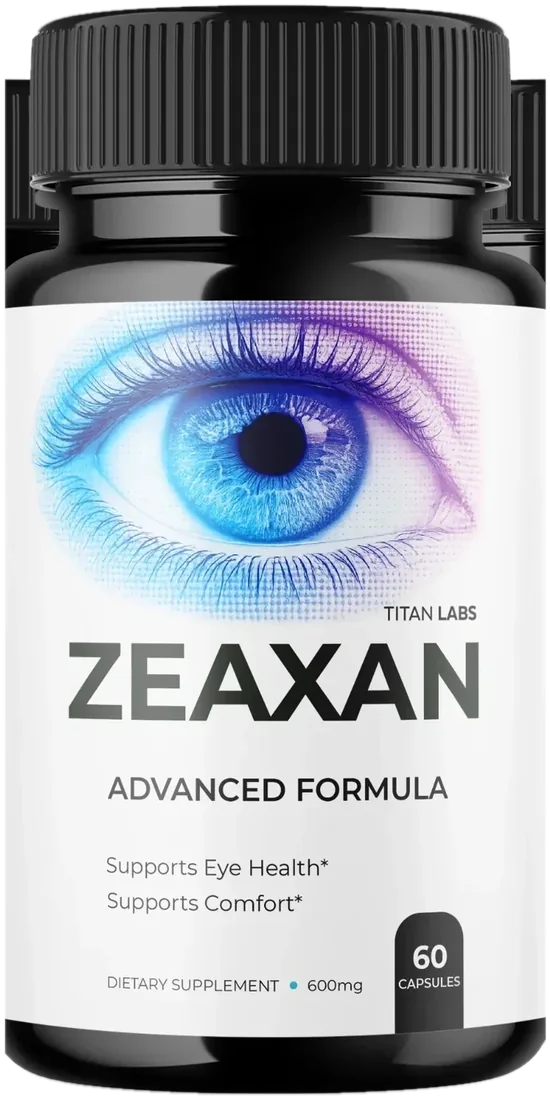
Why is Himalayan pink salt listed first on Zeaxan?
Himalayan pink salt is listed first because it is the largest single ingredient by weight in the Zeaxan blend. US labels list blend ingredients from most to least by weight, so the first name always outweighs every name below it.
That surprises many readers. The product name points to zeaxanthin, and the bottle carries a large eye graphic. Yet the heaviest thing in each serving is a mineral salt, not an eye pigment.
This post explains the rule, works out the numbers, and sets out what the label does and does not tell you about the salt.
What is the blend order rule?
The blend order rule says that ingredients inside a proprietary blend must be listed from most to least by weight. The label must show the blend's total weight, but it does not have to show each ingredient's weight.
That is how the Zeaxan panel works. It prints "Proprietary Blend 600mg" for a 2-capsule serving, with "Daily Value not established". Below that come 11 names and no single amounts. The FDA sets labeling rules for dietary supplements, and blend order is one of them (FDA).
The rule gives you a small but real tool. You cannot read the true amounts. You can read the order, and order sets limits.
How much salt could each serving hold?
Each serving holds somewhere between about 55 mg and 600 mg of Himalayan pink salt. That is a wide range, and the label gives no way to narrow it further.
Read the order
Blend ingredients are listed from most to least by weight. Salt is first, so nothing in the blend outweighs it.
Set the top ceiling
Salt could in theory be the whole 600 mg. Nothing on the label rules that out, though it is very unlikely.
Set the floor
Salt must weigh at least as much as each of the other ten. If all 11 were equal, each would be about 55 mg. So salt is at least about 55 mg.
Set the rest
Each later ingredient can be no more than 600 divided by its place. The tenth, zeaxanthin, is capped at 60 mg.
The floor comes from simple math. Salt has to weigh at least as much as each of the ten ingredients below it. The lowest salt could go is if all 11 shared the blend evenly. That would put each at 600 divided by 11, about 55 mg.
The top end is the whole blend. That would leave nothing for the other ten, so the real figure sits somewhere between. Where exactly is not published.
What does salt first mean for the other ingredients?
Salt first means every other ingredient weighs no more than the salt does. The ingredients linked most closely to eyes, lutein and zeaxanthin, sit fifth and tenth.
| Place | Ingredient (label spelling) | Most it can weigh per 2 capsules | How the ceiling is found |
|---|---|---|---|
| 1 | Himalayan Pink Salt | 600 mg (and at least about 55 mg) | 600 divided by 1 |
| 2 | Cinnamon Extract | 300 mg | 600 divided by 2 |
| 3 | AGP Choline | 200 mg | 600 divided by 3 |
| 4 | Bacopa Monnieri (20%) | 150 mg | 600 divided by 4 |
| 5 | Lutein (5%) | 120 mg | 600 divided by 5 |
| 6 | Bilberry Leaf Powder | 100 mg | 600 divided by 6 |
| 7 | Vitamin B6 (as Pyridoxine) | 86 mg | 600 divided by 7 |
| 8 | Gingko Biloba Powder | 75 mg | 600 divided by 8 |
| 9 | Vitamin B12 (as Cyanocobalamin 1%) | 67 mg | 600 divided by 9 |
| 10 | Zeaxanthin (5%) | 60 mg | 600 divided by 10 |
| 11 | Green Tea Extract (50%) | 55 mg | 600 divided by 11 |
The ceilings shrink fast. Lutein can be no more than 120 mg of a material marked 5%. Zeaxanthin can be no more than 60 mg of a material marked 5%. If those markings mean 5% pigment, a serving holds at most about 6 mg of lutein and at most about 3 mg of zeaxanthin. The label does not confirm what the 5% means.
For scale, the NEI's AREDS2 formula used 10 mg of lutein and 2 mg of zeaxanthin a day, with other nutrients, in people with intermediate age-related macular degeneration (NEI). Zeaxan is not that formula and should not be read as a match. The lutein and zeaxanthin guide covers the comparison in full.
Ceilings are also generous by design. In many blends, the first ingredient takes a large share. If salt did that here, the later ingredients would sit well below their ceilings.
What is Himalayan pink salt?
Himalayan pink salt is rock salt mined in Pakistan. Like table salt, it is mostly sodium chloride. Small amounts of other minerals, such as iron, give it the pink color.
It is a common kitchen salt. It is not studied as an eye nutrient, and no eye claim for it is made here. The ingredients page lists it with a plain note: salt adds a little sodium to each serving.
How much sodium is not printed. The panel lists no sodium line at all. If you follow a low-sodium plan for your heart or kidneys, bring the label to your doctor and ask how it fits. Even at the top end, the salt in a serving is a small fraction of a teaspoon.
Why might a maker put salt first in an eye formula?
The label does not say why salt leads, so any reason is a guess. There is no printed note, and no brand panel explains it.
Salt and other minerals sometimes appear in blends as a mineral source or to help powders flow and fill capsules evenly. Some brands also like the "natural mineral" appeal of pink salt. Any of these could apply. None is confirmed.
What the label tells you
- Salt is the largest single ingredient by weight in the blend.
- Salt is somewhere from about 55 mg up to 600 mg per serving.
- Every eye-related ingredient weighs no more than salt does.
What the label does not tell you
- Why the maker put salt in an eye formula.
- The real weight of salt, or of anything else in the blend.
- How much sodium a serving adds.
- Whether the salt serves a technical role, such as helping powder flow.
We asked ourselves one plain question. Would a buyer reading only the front of the bottle expect salt to be the heaviest part? Most would not. That is why this site points it out on every label page.
Does salt first make Zeaxan a bad choice?
Salt first does not make Zeaxan unsafe, and it does not make it useless. It does mean the eye-related ingredients are a smaller part of each serving than the name suggests.
How you weigh that depends on why you are looking. If you want a known amount of lutein and zeaxanthin, a label with printed amounts will tell you more. If you want a daily habit with a mix of ingredients, Zeaxan gives you that, in amounts the label does not publish.
Food still matters most. Leafy greens, corn and egg yolks carry lutein and zeaxanthin in known forms. The NIH Office of Dietary Supplements notes that supplements cannot replace a healthy diet (NIH ODS).
How can you read any blend label this way?
You can read any blend label this way by dividing the blend total by each ingredient's place. It takes a minute and works on every proprietary blend.
Start with the total, here 600 mg. Note where the ingredient you care about sits. Divide. The answer is its ceiling. Then check the first ingredient, because it sets the floor for itself and a cap for everything else.
Two more checks help. Look for percentage markings, such as the 5% after lutein, and ask what they refer to. And look for vitamins listed without amounts. On this label, vitamins B6 and B12 appear inside the blend with no amount or % Daily Value, which is unusual. The Supplement Facts page walks through each line.
Questions people ask about this
Is salt really the biggest ingredient in Zeaxan?
Yes, by weight. It is listed first in the 600 mg blend, and blend ingredients run from most to least by weight.
How much salt is in a serving?
Not published. From blend order, somewhere between about 55 mg and 600 mg per 2 capsules.
How much sodium does Zeaxan add?
The label prints no sodium line. If you follow a low-sodium plan, show the label to your doctor.
Does pink salt help the eyes?
It is not studied as an eye nutrient, and this site makes no eye claim for it.
Why is zeaxanthin so far down the list?
The label does not say. Tenth place means it weighs no more than 60 mg of a material marked 5%.
Sources for this page
Keep reading
Ready when you are
Order Zeaxan from the authorized US retailer
60 capsules in every bottle, 2 capsules a day. 60-day money-back guarantee. A real person at the order desk handles tracking, changes and refunds; the number is in the footer.