Buyer checklist
Zeaxan Label Checklist: 8 Questions Before You Buy
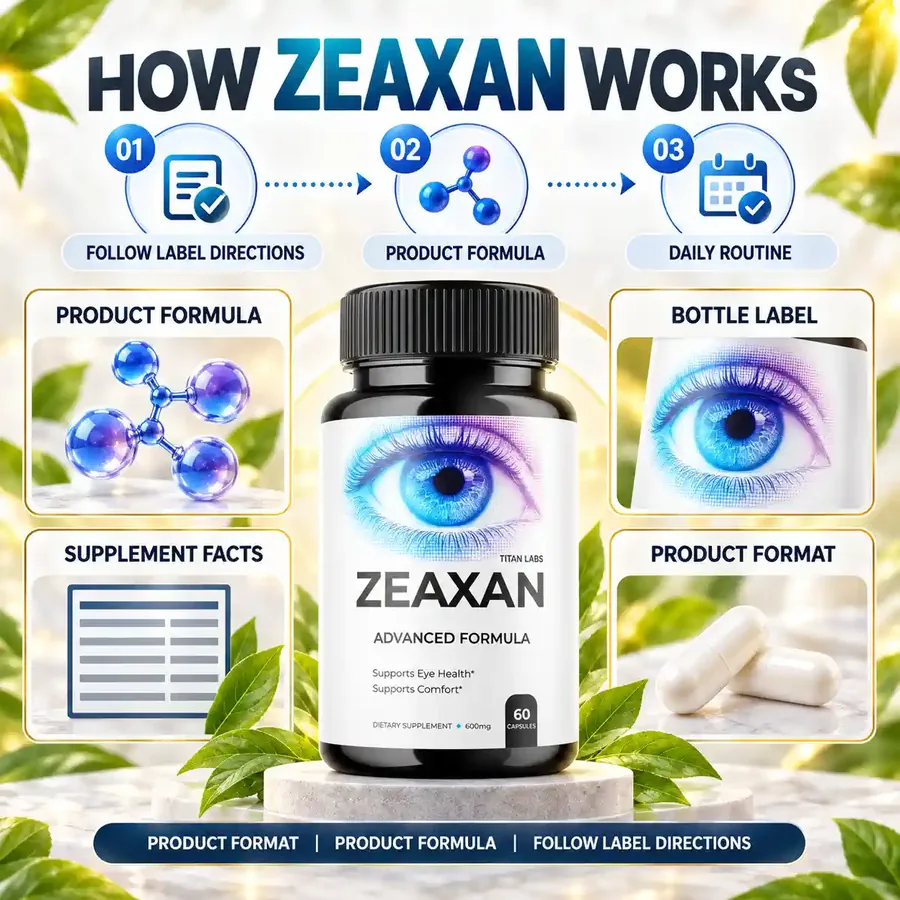
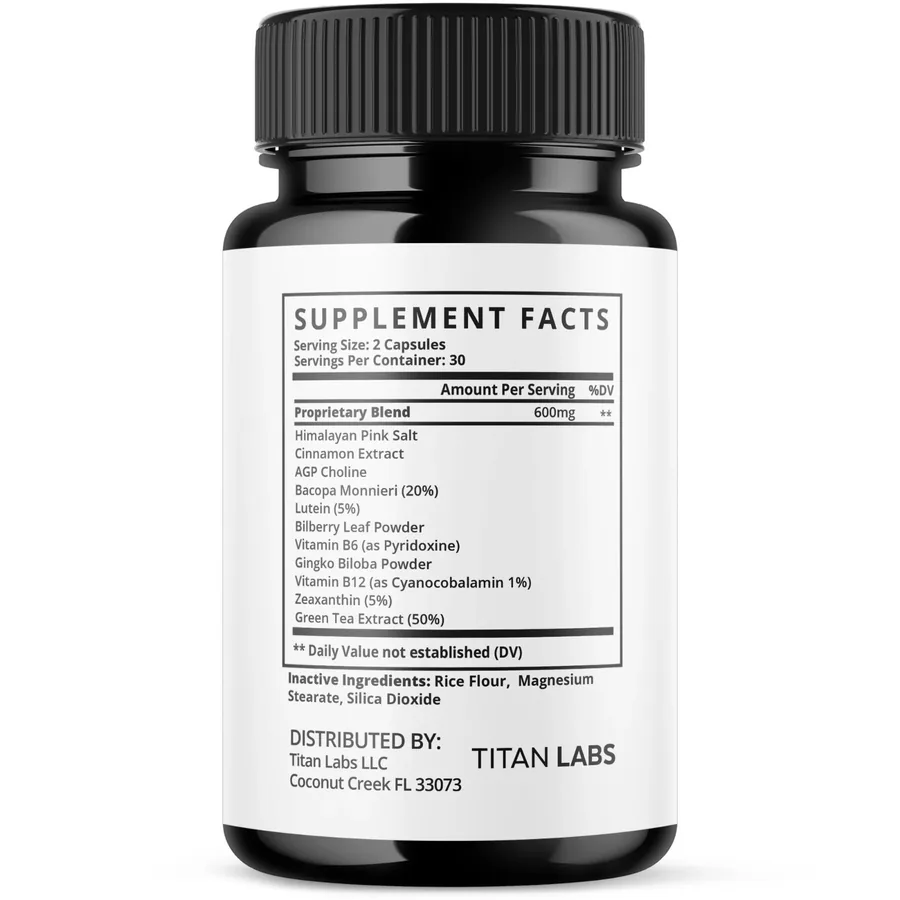
Before buying any eye supplement, check the bottle rather than relying on a product name or an ad. For Zeaxan, the key verified facts are a 2-capsule daily serving, 60 capsules per bottle, and an 11-ingredient 600 mg proprietary blend with no individual ingredient amounts printed.
Why a checklist beats a claim
A supplement page can contain a bold benefit statement, a familiar ingredient, a product image, and a guarantee. None of those items replaces the label. A checklist changes the question from “Does this sound good?” to “What can I actually verify from the bottle and the seller’s written terms?” That shift protects against both exaggerated expectations and unnecessary fear when a detail is simply not published.
FDA consumer guidance explains that dietary supplements are not approved by FDA for safety and effectiveness before they are sold. Companies are responsible for making sure their products meet the rules. That does not mean every product is unsafe, nor does it mean a supplement has been evaluated like a prescription drug. It means a buyer should read the Supplement Facts panel, identify the serving size and ingredients, and keep medical questions with a qualified clinician.
Zeaxan gives a useful example because the label offers clear high-level facts alongside clear limits. The formula states 600 mg of proprietary blend per two-capsule serving and names eleven ingredients. It does not provide the milligram amount for any one ingredient. Both the printed facts and the missing facts belong in a sound buying decision.
The eight questions to ask before ordering
| Question | Why it matters | What Zeaxan’s label says |
|---|---|---|
| 1. What is one serving? | Dose comparisons start with the serving, not the bottle. | Two capsules daily. |
| 2. How many servings are in a bottle? | It shows how long one bottle lasts at the label dose. | 60 capsules; 30 servings. |
| 3. Are key ingredients individually quantified? | A name alone cannot show the amount used. | No; all eleven are inside one 600 mg proprietary blend. |
| 4. What does the ingredient order show? | Blend ingredients are listed by predominance by weight. | Himalayan pink salt is first; zeaxanthin is tenth. |
| 5. Do directions agree across the materials? | The bottle is the controlling use instruction. | The bottle says between meals; one panel says after meal. |
| 6. What safety questions apply? | Ingredients and medicines can change the right choice. | Review ginkgo, cinnamon, green tea extract, vitamin B6 and your own medicines with a clinician. |
| 7. What is actually being claimed? | Support language differs from a proven treatment claim. | Front label says supports eye health and comfort; it does not claim to diagnose, treat, cure, or prevent disease. |
| 8. What seller and refund information is written down? | Keep a record before payment, not after a problem. | Checkout displays current pack terms; the site describes a 60-day money-back window and customer-service contact. |
The table is intentionally plain. Its job is not to decide for a reader. Its job is to make any decision traceable to the label, a written seller term, or a clinician’s advice.
1. What is the serving, and what does it make one bottle?
Start at the top of Supplement Facts. Serving size tells you the amount the maker wants compared and the amount behind every per-serving number. A 60-capsule bottle can last 60 days, 30 days, or less depending on the instructions. Zeaxan’s label says two capsules daily and lists 30 servings per container. At that label dose, one bottle is a 30-day supply.
That fact matters when reading reviews and timing claims. A bottle count is not a timeline of results. It is only a quantity. The Zeaxan label says to use an opened bottle within 60 days, so opening one bottle at a time is simpler than treating several bottles as one open supply. The how-to-use page keeps the directions, storage wording, and label-versus-panel difference in one place.
2. Which amounts are printed, and which are not?
Zeaxan prints one active-blend amount: 600 mg per serving. It does not separately print the amount of Himalayan pink salt, cinnamon extract, AGP choline, bacopa, lutein, bilberry leaf powder, vitamin B6, ginkgo, vitamin B12, zeaxanthin, or green tea extract. That is the central limit of any ingredient-by-ingredient comparison.
A proprietary blend is a regulated label format, not a promise that the individual doses are known. FDA guidance says the total blend weight is shown and ingredients appear in descending order by weight. The format can tell a buyer that an ingredient is present and where it falls in the blend. It cannot tell the buyer the specific amount of the tenth item. A web page should say “not published” at that point rather than invent a precise number.
The detailed ingredients page keeps the order and the upper-bound logic separate. A ceiling based on the total blend is only a limit; it is not a measurement of what is in a capsule.
3. What does the ingredient order tell you?
In Zeaxan’s proprietary blend, the order begins with Himalayan pink salt and ends with green tea extract; lutein is fifth and zeaxanthin is tenth. The order tells us that earlier ingredients weigh at least as much as later ingredients within the blend. It does not tell us how much more. A large first ingredient could take most of the blend, or several early ingredients could be close together.
That distinction is useful when a product’s marketing gives visual prominence to one ingredient. A prominent name on a front label may still sit late in the Supplement Facts order. For this product, “Zeaxan” resembles the word zeaxanthin, but the label lists zeaxanthin tenth. The relevant evidence is the panel, not the resemblance between a brand name and an ingredient name.
4. Which directions should control?
Use the actual bottle directions when two materials conflict. Zeaxan’s Supplement Facts label says, “take 2 capsules daily between meals, or as directed by your healthcare provider.” A product panel says after meal. The more specific label instruction is the one this site records as controlling. A buyer with a clinician’s instruction should follow that clinician rather than a generic web routine.
Directions do not prove benefit. They tell a reader how the seller says to use the product. Taking more than the label directs does not create a better comparison to a study, and doubling a proprietary blend does not reveal its individual doses. If the label, checkout, or bottle in hand differs from the information shown here, pause and use the bottle in hand as the newer record.
5. What safety questions belong before a purchase?
Every ingredient list is also a conversation starter. The Zeaxan label contains ginkgo, cinnamon, green tea extract, vitamin B6, and other ingredients that can matter when someone uses medicines or other supplements. The site does not know a reader’s conditions, prescriptions, pregnancy status, or total intake from food and other products. That is why a label review cannot substitute for an individualized safety check.
The safest questions are concrete: Do I take blood thinners? Do I use diabetes, heart, or cholesterol medicines? Do I already take a vitamin B6 product? Am I pregnant, nursing, under eighteen, preparing for surgery, or managing an eye condition? The side-effects page describes the label-based cautions and links to the source pages; it does not diagnose reactions.
Any sudden vision change, eye pain, flashes, a new shower of floaters, or a shadow in vision needs prompt eye care. A supplement checkout is not the place to troubleshoot those symptoms.
6. Is the claim a support statement or a treatment statement?
Words such as “supports,” “promotes,” and “helps maintain” are commonly used in supplement marketing. They are not the same as proof that a product treats a disease or will change a measurable outcome for every buyer. Zeaxan’s bottle uses support wording for eye health and comfort. The site’s FDA disclaimer states that the product is not intended to diagnose, treat, cure, or prevent disease.
This matters especially for eye conditions. The National Eye Institute’s AREDS2 guidance is tied to particular AMD stages and a specific formula. A general eye-health support claim does not turn an unrelated proprietary blend into that formula. The AREDS2 comparison explains the difference using the printed ingredients and amounts rather than a promise.
7. What should you record about the seller, price, and guarantee?
Before paying, save the product name, pack selected, final price, delivery terms, checkout confirmation, order ID, and the written refund instructions shown at checkout. Prices and shipping fees can change, so this site does not freeze a price in an article. The current checkout is the source for the final total before payment.
The Zeaxan site describes a 60-day money-back window and provides customer-service contact details for orders, tracking, and refunds. Written terms at checkout govern a particular purchase. Keeping the order email makes it easier to verify the seller, ask about a shipment, or start a refund request if the product is not a fit. That is ordinary record-keeping, not a promise that a refund will be approved in every circumstance.
Using the checklist on Zeaxan: the honest summary
After the eight questions, the product summary should be modest. Zeaxan is a dietary supplement with 60 capsules per bottle and a label direction of two capsules daily between meals. Its Supplement Facts panel contains an 11-ingredient, 600 mg proprietary blend. The ingredients are listed in order, but their individual amounts are not published. Its label uses eye-health and comfort support language and its site links to a third-party checkout.
What cannot be concluded from those facts is equally important. The panel cannot confirm the milligrams of lutein or zeaxanthin, prove that the finished blend matches AREDS2, or predict whether a person will notice any change. A buyer who needs an evidence-based formula for diagnosed AMD should take the exact label to an eye-care professional rather than infer equivalence from a product name.
When to stop the checklist and ask for help
A checklist is for ordinary comparison, not urgent symptoms or complicated treatment choices. Stop and ask a clinician or pharmacist when a label leaves out an amount you need to compare, when you take medicines that may interact, when you are considering several supplements together, or when an eye condition has already been diagnosed. An up-to-date bottle, medicine list, and photo of the Supplement Facts panel make that conversation more useful.
For a first purchase, use the smallest decision that the facts support. Read the bottle, check the terms at checkout, keep the confirmation, and do not let a claim outrun the label. That approach is slower than shopping from a headline, but it is clearer and easier to revisit later.
Sources and editorial limits
This checklist uses the Zeaxan label and the FDA’s consumer overview of dietary supplements and proprietary-blend labeling guidance. It does not test, authenticate, or medically assess any bottle. The page reports what the label says and clearly notes where the label leaves an answer unpublished.
Questions people ask about the checklist
How many days does one Zeaxan bottle last?
At the label direction of two capsules a day, 60 capsules make 30 servings, or 30 days.
Does Zeaxan list the milligrams of lutein and zeaxanthin?
No. Both are inside the 600 mg proprietary blend, and the label does not publish individual amounts.
Which Zeaxan directions should I follow?
The bottle says two capsules daily between meals, or as directed by a healthcare provider. The bottle label takes priority over a conflicting promotional panel.
Does “supports eye health” mean Zeaxan treats an eye disease?
No. It is support wording. Zeaxan is not represented here as a treatment for an eye disease, and sudden or changing vision needs eye care.
Keep reading
Check the facts
Read the Zeaxan label before you decide
Review serving size, blend information, directions, and safety notes. The checkout shows the current pack terms before payment.