Label comparison
AREDS2 vs. Zeaxan: What the Labels Actually Say
AREDS2 is a specific nutrient formula studied in people with intermediate or late age-related macular degeneration. Zeaxan is a different 600 mg proprietary blend that lists lutein and zeaxanthin but not their amounts. A shared ingredient name does not make two formulas equivalent, and Zeaxan is not an AREDS2 formula.
The short comparison
People often put two bottles side by side, spot the words lutein and zeaxanthin, and assume the products do the same job. That is an understandable shortcut, but it skips the parts of a label that change the meaning: the exact formula, the amount per serving, the population studied, and the outcome that was measured.
The National Eye Institute describes AREDS2 as a particular combination of vitamin C, vitamin E, zinc, copper, lutein, and zeaxanthin. It was studied for people with intermediate AMD in one or both eyes, or late AMD in one eye. Its purpose was to slow progression to late AMD in that defined group; it was not a general promise for screen comfort, sharper sight, or healthy adults without that diagnosis.
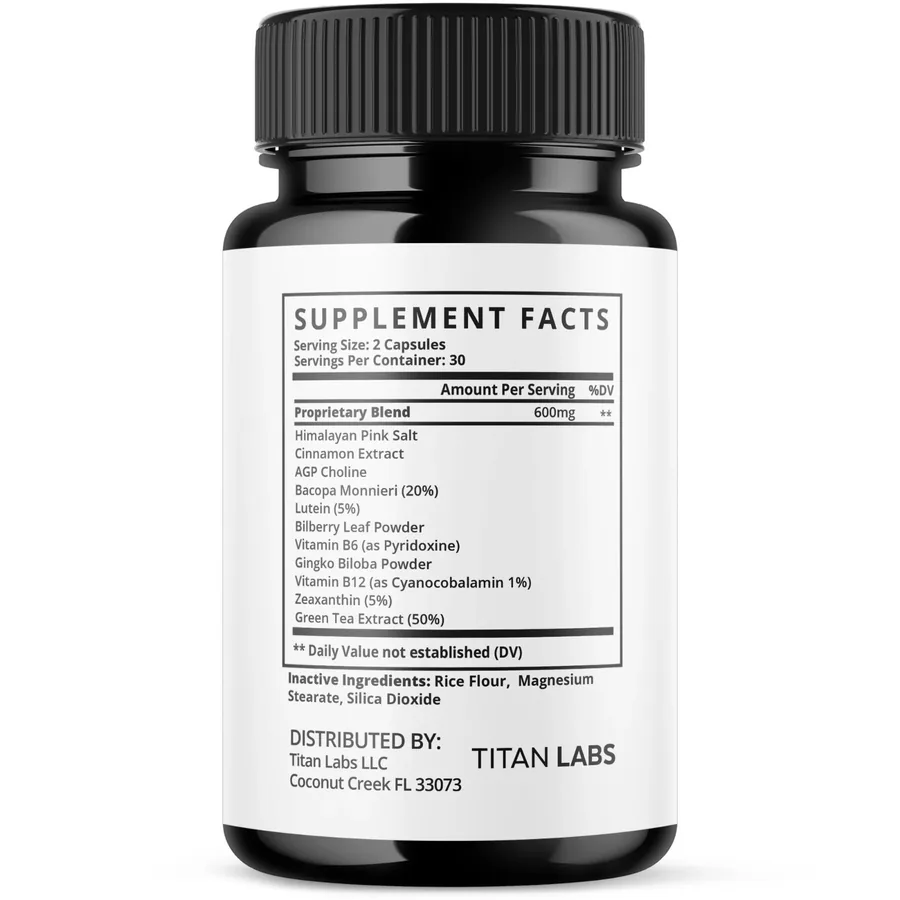
Zeaxan is labeled as a dietary supplement with a 2-capsule serving, 30 servings per bottle, and one 600 mg proprietary blend. The blend lists 11 ingredients, including lutein and zeaxanthin, but it does not print the amount of either. Its front-label language says it supports eye health and comfort. Those words describe a structure/function claim; they do not establish that the product was tested as an AREDS2-style formula.
What AREDS2 was studied for
AMD means age-related macular degeneration, an eye disease that can affect central vision. The NEI says AREDS2 supplements may help slow vision loss for people with intermediate AMD in one or both eyes, or late AMD in only one eye. The same page says AREDS2 supplements cannot prevent early AMD from becoming intermediate AMD. That distinction is why an eye exam and diagnosis matter more than a marketing phrase on a bottle.
AREDS2 is also a named recipe, not a category label. The NEI table lists 500 mg vitamin C, 400 IU vitamin E, 80 mg zinc, 2 mg copper, 10 mg lutein, and 2 mg zeaxanthin. Products can call themselves eye supplements while having a different list, a different dose, or no published amount for a listed ingredient. The useful question is not whether a bottle contains one familiar carotenoid; it is whether its printed facts actually match the formula relevant to the advice a clinician gave.
| Question | AREDS2 formula described by NEI | Zeaxan label |
|---|---|---|
| Formula purpose | Studied in defined AMD groups | Dietary supplement labeled for eye-health and comfort support |
| Lutein | 10 mg printed in the formula | Listed inside a proprietary blend; amount not published |
| Zeaxanthin | 2 mg printed in the formula | Listed inside a proprietary blend; amount not published |
| Other core nutrients | Vitamin C, vitamin E, zinc and copper are part of the formula | Those AREDS2 nutrients are not listed on this Supplement Facts panel |
| Serving information | Compare the product label with the NEI formula | 2 capsules daily; 60 capsules, 30 servings |
The comparison is descriptive, not a recommendation to start, stop, or swap a supplement. An eye doctor can connect a label to a diagnosis, other medicines, diet, and smoking history in a way a general web page cannot.
What the Zeaxan label shows
The Zeaxan Supplement Facts panel provides several useful facts. A serving is two capsules. One bottle provides 30 servings. The listed active material is a 600 mg proprietary blend with Daily Value not established. In label order, it contains Himalayan pink salt, cinnamon extract, AGP choline, bacopa monnieri, lutein, bilberry leaf powder, vitamin B6, ginkgo biloba powder, vitamin B12, zeaxanthin, and green tea extract.
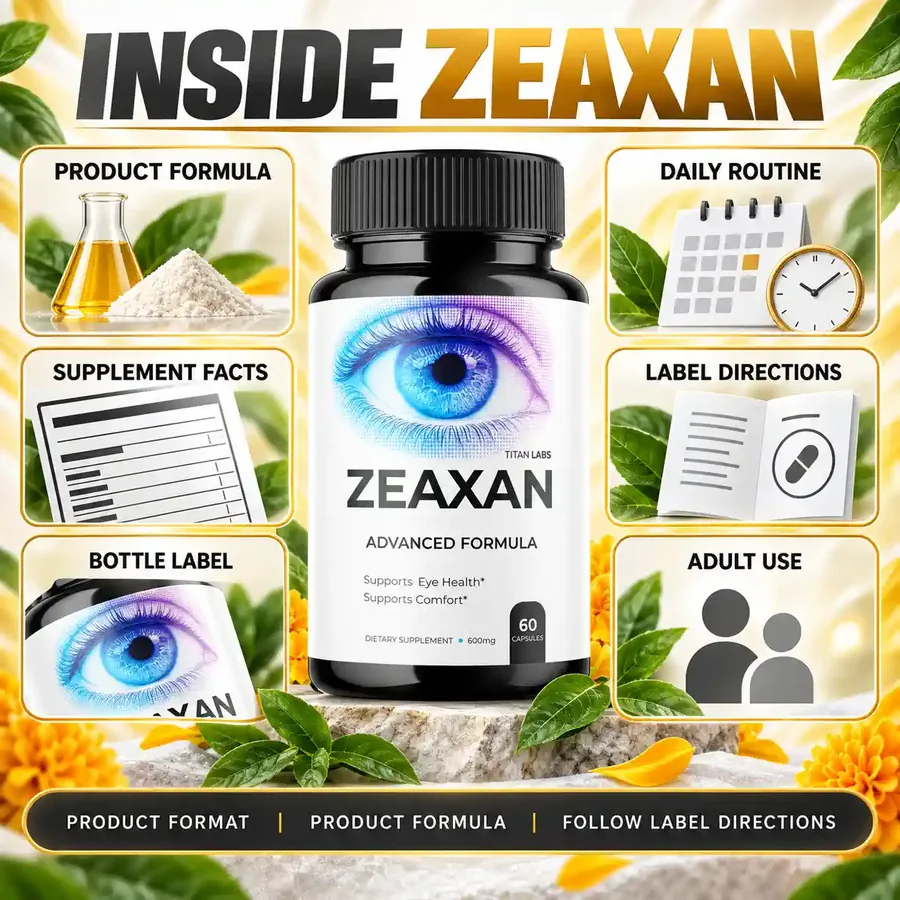
The panel does not report a milligram amount for lutein, zeaxanthin, or any other individual blend ingredient. It also does not say that Zeaxan is AREDS2, or that the finished formula was clinically tested for AMD. The label instructions say two capsules daily between meals. A separate brand panel says after meal; where label and promotional panel differ, the bottle label is the safer document to follow. Read the full Supplement Facts guide before relying on a paraphrase.
Why ingredient names are not enough
An ingredient name is one piece of evidence, not the whole answer. Research is attached to a particular preparation, dose, schedule, population, and outcome. A study of a formula with exactly measured nutrients cannot automatically be transferred to a different blend with unprinted ingredient amounts. The same caution applies in the other direction: a bottle can list a research-backed ingredient without being the product used in that research.
For lutein and zeaxanthin, the NEI guidance gives a concrete check: 10 mg and 2 mg are part of the AREDS2 formula. Zeaxan's label does not publish either number, so a reader cannot determine from the label whether it supplies those amounts. It would be inaccurate to calculate them from a 5% notation alone. The label does not explain whether that percentage identifies the raw material, the standardized constituent, or something else, and it does not disclose how much of the 600 mg blend belongs to that line.
That uncertainty is not proof that the amount is too high or too low. It is simply a boundary on what can be verified. Good label reading separates a known fact from a plausible inference and an inference from a claim of effectiveness.
How to read a proprietary blend without guessing
FDA labeling guidance says a proprietary blend identifies the blend by name, gives its total weight, and lists other dietary ingredients in descending order by weight. That order is useful: in a blend, the first ingredient is present at least as much as the next one. It does not reveal the amount of any individual ingredient, however.
For Zeaxan, Himalayan pink salt is listed first and zeaxanthin is listed tenth. That tells us their relative order inside the blend. It does not tell us the amount of salt, lutein, or zeaxanthin. The 600 mg is the total for all eleven ingredients together. Dividing that total among ingredients produces only hypothetical ceilings, not the actual formula. The blend sequence guide explains why this point matters.
- Start with the serving size, not the bottle count.
- Find out whether each key nutrient has its own printed amount.
- If there is a proprietary blend, note its total and ingredient order.
- Do not treat a percentage beside an ingredient as its final dose unless the panel explains it.
- Compare the complete formula to the study or professional advice you are considering.
This process is less exciting than a before-and-after claim, but it gives a buyer a defensible record of what the bottle actually says.
Questions for an eye-care professional
Supplements are not a substitute for diagnosing a change in vision. Sudden loss of vision, a curtain or shadow, flashes, many new floaters, eye pain, or a sudden change in one eye needs prompt medical care. Those symptoms are not a reason to compare bottles at home.
If an eye-care professional has discussed AREDS2, take the exact product label or a clear photo of its Supplement Facts panel to the visit. Ask whether the formula matches the advice for your eye condition, whether your medicines or other supplements change the safety picture, and whether there is a reason to avoid a particular ingredient. Do not assume that an eye-health supplement is interchangeable with a clinician-recommended AREDS2 formula.
Zeaxan's listed ingredients also give practical reasons for a medication review. The site’s safety page notes ginkgo, cinnamon, green tea extract, and vitamin B6 as reasons to discuss medicines and other supplements with a clinician. That is a precaution based on the ingredient list, not a diagnosis or a claim that a side effect will occur.
A buyer checklist before treating two labels as comparable
Keep the check short enough to use. First, write down the condition or goal you are trying to address. Second, identify whether that goal came from a medical diagnosis, a general wellness preference, or advertising. Third, compare the full printed facts panel with the formula in the reliable source you are reading. Fourth, stop at any missing amount rather than filling it in with math.
For Zeaxan, the honest summary is direct: it is a 2-capsule, 600 mg proprietary-blend supplement that includes lutein and zeaxanthin among eleven ingredients. It is not labeled as AREDS2, does not list the individual amounts of those carotenoids, and should not be represented as proven to improve vision. The lutein and zeaxanthin explainer gives more background on the names; this page stays focused on what the two labels permit a consumer to compare.
Sources and editorial limits
This guide compares the live Zeaxan Supplement Facts panel with federal eye-health and label guidance. It does not test capsules, verify a concentration, or diagnose AMD. The key sources are the National Eye Institute’s AREDS2 overview, the NEI’s AREDS/AREDS2 questions and answers, and the FDA’s proprietary-blend labeling guide. Each supports a specific point above; none evaluates Zeaxan as a finished formula.
When an official source describes a formula, this article uses the source’s population and purpose instead of broadening it. When the Zeaxan label does not print an amount, this article records that omission instead of estimating the dose. The result is deliberately narrower than a sales claim: it helps readers compare documents, then take personal medical questions to their own eye-care professional. It also leaves room for new evidence or a new bottle label to change a future material comparison.
How to use this comparison later
Save a photo of the Supplement Facts panel with the purchase record. If the bottle changes, compare the new panel again rather than assuming an old article still describes it. Product labels, ingredient sources, and clinical guidance can change. A dated comparison is useful only when it stays tied to the exact formula and instructions a buyer is holding.
Questions people ask about this comparison
Is Zeaxan an AREDS2 supplement?
No. Zeaxan is a different 600 mg proprietary blend. The label does not list the AREDS2 formula or the individual lutein and zeaxanthin amounts used in AREDS2.
Does lutein on a label prove a product matches eye research?
No. A useful comparison needs the exact preparation, amount, population, and outcome. The Zeaxan label lists lutein but does not publish its amount.
Can I calculate Zeaxan’s zeaxanthin dose from the 600 mg blend?
No. The 600 mg is shared by eleven ingredients. Ingredient order gives relative weight order, not an individual dose, and the 5% notation is not explained as a final zeaxanthin amount.
Who should ask an eye doctor about AREDS2?
The NEI describes AREDS2 for people with intermediate AMD in one or both eyes, or late AMD in one eye. A clinician can decide whether that applies to an individual diagnosis.
Keep reading
Read the label first
See the Zeaxan facts before you decide
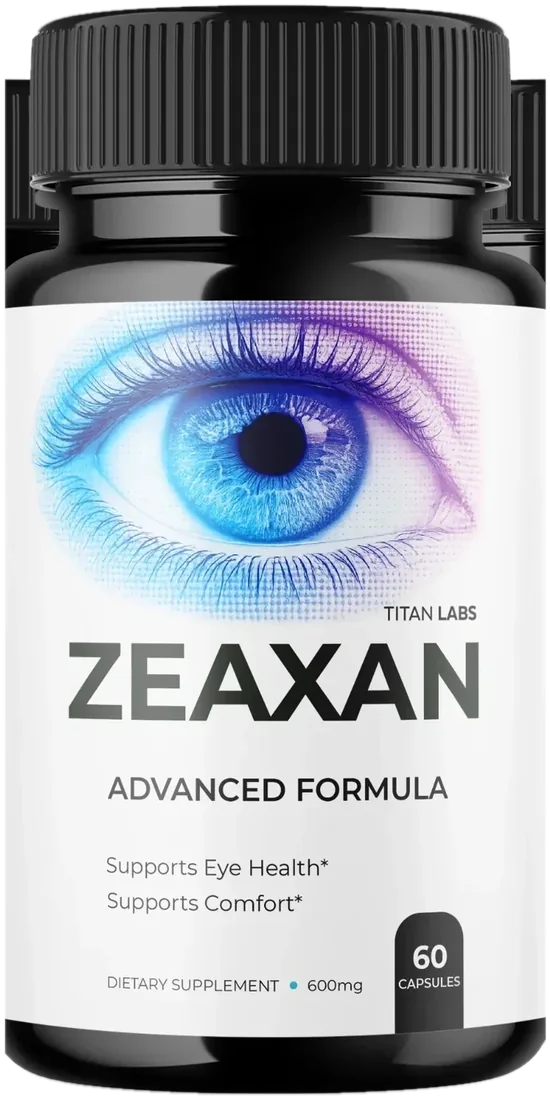
One bottle holds 60 capsules. The label directs two capsules daily between meals. Read the facts and safety information before you use any supplement.